


Key Takeaways
1. What is a lifepo4 battery: A battery made with lithium iron phosphate is commonly called a LiFePO4 battery. It is also known as an LFP battery.
2. Lithium iron phosphate (LiFePO4) batteries are considered the most reliable, safest, most environmentally friendly, and most stable lithium batteries.
3. The LiFePO4 battery delivers its best performance at the recommended level, 3.25V.
What is a LiFePO4 battery?
A battery made with lithium iron phosphate is commonly called a LiFePO4 battery. It is also known as an LFP battery. Some other batteries that belong to the lithium family include lithium-ion, lithium titanate, lithium cobalt oxide, and lithium nickel cobalt aluminum oxide.
Lithium iron phosphate (LiFePO4) batteries are considered the most reliable, safest, most environmentally friendly, and most stable lithium batteries. In comparison to lithium-ion batteries, LiFePO4 batteries last longer and are safer to use in various conditions.
A Lithium iron phosphate batteries has 100% discharge capacity (no need to worry about over-discharging) and delivers high power density. This battery is an ideal choice for applications where short bursts of high power are required because it can deliver high currents for a shorter period.
The common applications of LiFePO4 batteries include electric motors, home appliances, and energy-hungry devices. They have started replacing lithium-ion batteries in solar-powered equipment like Solar RV Kit, and General Off-Grid Solar Kit.
How do LiFePO4 batteries work?
The working principle of lithium iron phosphate batteries is quite similar to traditional lithium-ion (Li-ion) batteries. In both battery types, lithium ions move between the anode and the cathode for charging and discharging purposes. These batteries use lithium iron phosphate as the cathode and graphite carbon as the anode material.
When a LiFePO4 battery is connected to a battery charger, lithium ions travel from the cathode (lithium iron phosphate crystal) to the anode (graphite crystal) and embed themselves in the graphite lattice. Exactly the opposite happens in the case of discharging.
When your battery is connected to the load, it starts to discharge. Lithium ions re-intercalate into the lattice during the discharging process, as they move from anode (graphite crystal) to cathode (lithium iron phosphate).
Lithium iron phosphate batteries have various safety mechanisms, making them more reliable for outdoor and indoor applications. These mechanisms include solid electrolytes, thermal runaway prevention, stable cathode material, battery management system, non-flammable electrolyte, and explosion-proof casing. Moreover, LiFePO4 batteries operate efficiently when you place them in the ideal temperature range of 0-45 degrees Celsius (or 32-113 Fahrenheit).
Key applications of LiFePO4 batteries
Lithium iron phosphate batteries offer a wide range of real-life applications for running various devices (like portable electronics and electric vehicles) and developing reliable backup power sources to deal with frequent power outages.
- Renewable energy: LiFePO4 batteries are used in different renewable energy systems. They help you store excess energy and deliver a consistent power supply. For example, they can store excess solar energy during the daytime and provide it at night or when the utility grid is off. Similarly, these batteries can store excess energy from wind farms and can be combined with other energy sources to offer a reliable power supply.
- Electric vehicles: Lithium iron phosphate batteries are lightweight and have higher specific energy. Therefore, they are the perfect power source for EVs, as they reduce the vehicles' overall weight.
- Portable electronics: These batteries have high energy density, are compact and lightweight, and deliver high current over shorter periods. Therefore, they are an ideal choice for portable electronics, such as power banks, mobiles, and laptops.
- Backup power systems: Due to their safe operation, longer lifespan, and high energy density, LiFePO4 batteries are perfect for backup power systems with uninterruptible power supplies and solar electric systems.
Benefits of LiFePO4 batteries
Behind the increasing demand for LiFePO4 batteries, there is a long list of advantages they offer. Let's explore some of them.
1. Lifespan
Lithium iron phosphate batteries last longer than conventional lead-acid and lithium-ion batteries. You can charge and discharge these batteries from 2,500 to 5,000 times before they lose 20% of their total capacity. In contrast, the efficiency and capacity of lead-acid batteries are reduced after they are charged a few hundred times.
2. Safety
LiFePO4 batteries come with greater protection against thermal runaway and overheating; therefore, they are safer than Li-ion batteries. Moreover, the risk of explosion or catching fire is much lower with lithium iron phosphate batteries. This is why they are frequently used in residential applications. Unlike lead-acid batteries, LiFePO4 batteries don't emit harmful gasses.
3. Environmental benefits
They are made with non-toxic materials and are fully recyclable. In addition, they lose minimum energy during the charging and discharging processes. Lithium iron phosphate batteries also reduce waste and hazardous greenhouse gasses. Moreover, they contribute to cleaning up the air. Further, they reduce dependency on fossil fuels.
4. Efficiency
The efficiency of LiFePO4 batteries is incomparable to lithium-ion and lead-acid batteries. When it comes to charging, lithium iron phosphate batteries hold the full charge within just 2 hours or even less. Their self-discharge rate is only 2% per month when they are not in use, which is 30% for lead-acid batteries. Moreover, they have a higher runtime than other lithium batteries or lead-acid batteries.
5. Temperature sensitivity
LiFePO4 batteries can function properly in extremely low and high temperatures, unlike lithium-ion batteries. For example, a lithium iron phosphate battery can work seamlessly on as high as 60°C (or 140°F) and as low as 20°C (or -4°F).
LiFePO4 vs. Lithium-ion Batteries
Comparing LiFePO4 and lithium-ion batteries helps identify which performs better for your application.

| Feature | LiFePO4 Battery | Lithium-ion Battery |
|---|---|---|
| Energy Density | Lower energy density; ideal for EVs, boats, RVs, and solar systems, not for wearable devices. | Higher energy density; suitable for compact devices like fitness trackers, smart watches, AR glasses. |
| Safety | Structurally and thermally stable; can withstand higher temperatures, less prone to thermal runaway. | Less stable; higher risk of overheating and thermal runaway compared to LiFePO4. |
| Cost | Higher upfront cost due to added safety and longevity, but cost-effective over long-term use. | Lower upfront cost, but shorter lifespan may require replacement sooner. |
| Durability | Up to 5,000 charge-discharge cycles (~10 years lifespan). | 300-500 cycles (~2-3 years lifespan). |
LiFePO4 Batteries vs. Non-Lithium Batteries
This table compares Lithium Iron Phosphate (LiFePO4) batteries with non-lithium batteries, including nickel-cadmium (NiCd) and lead-acid types, across key factors.

| Feature | LiFePO4 Battery | Nickel-Cadmium (NiCd) Battery | Lead-Acid Battery |
|---|---|---|---|
| Weight | Lightweight; can be half the weight of a lead-acid battery of the same size; higher energy capacity per mass. | Heavier than LiFePO4 for the same energy output. | Bulkier and heavier; less energy per mass compared to LiFePO4. |
| Cost | Higher than NiCd by ~20% per watt-hour, but more affordable than lead-acid long-term. | Lower upfront cost per watt-hour, but lower efficiency and lifespan. | Lower upfront cost, but shorter lifespan and more maintenance increases long-term expense. |
| Efficiency | High efficiency: longer cycle life, higher energy density, better temperature tolerance, and lower maintenance. | Lower energy density; shorter cycle life; more temperature sensitive. | Moderate efficiency; lower round-trip and charging efficiency; more maintenance required. |
Best Lithium Iron Phosphate Batteries
Here’s a quick look at some of the top-performing LiFePO4 batteries available in the United States. Among them, Renogy’s LiFePO4 batteries stand out for their consistent quality, rigorous safety standards, and reliable performance in various applications.
1. Renogy 12.8V 100Ah LiFePO4 mini battery
Renogy 12.8V 100Ah LiFePO4 mini battery is the Renogy's smallest lithium iron phosphate battery. It comes with a low-temperature cut-off feature to ensure safe charging in freezing temperatures. You can monitor the battery stats by using it with a 300A battery shunt. Moreover, this battery is vibration-resistant and IP65-rated for an unmatched outdoor performance.
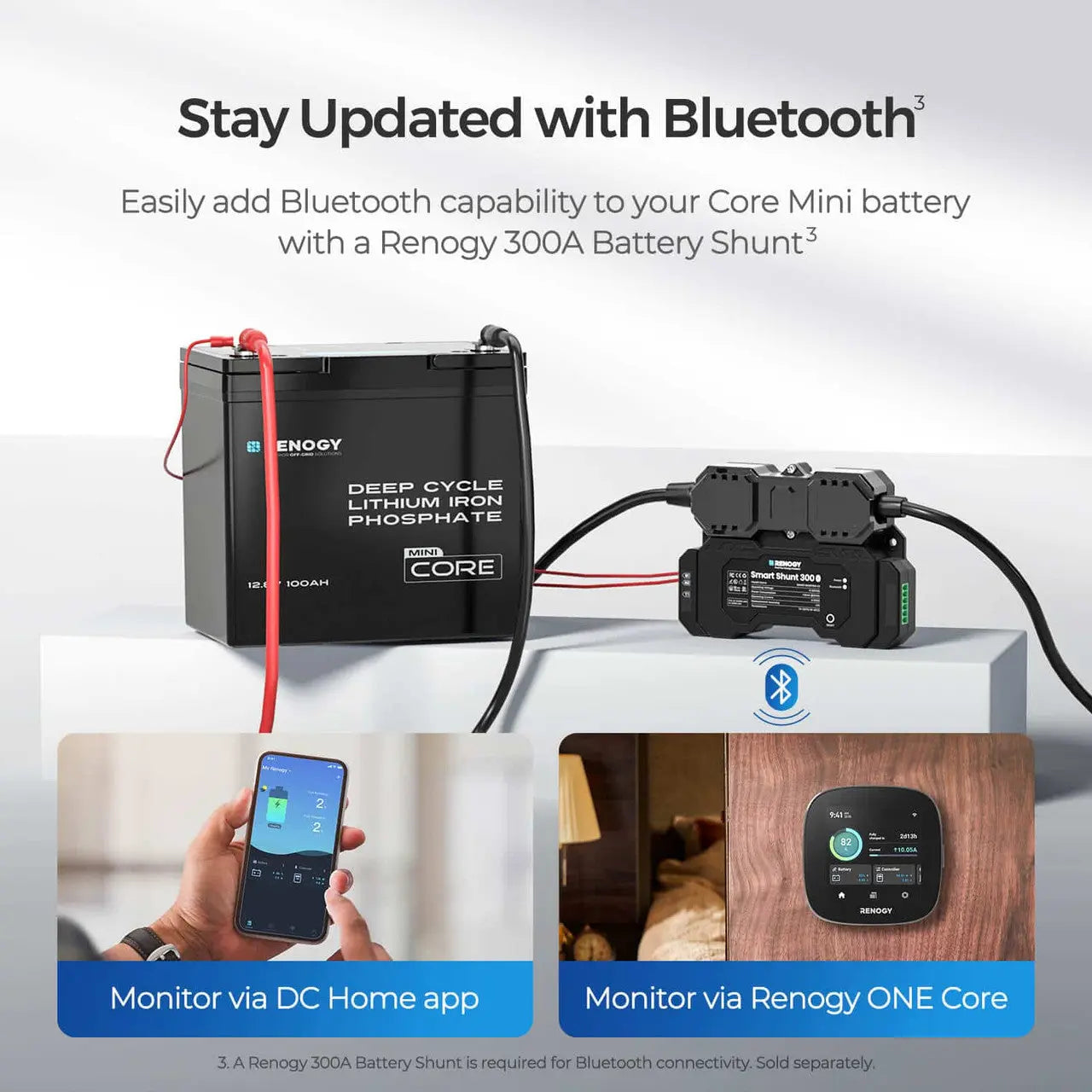
- Renogy's smallest 12.8V 100Ah LFP Battery.
- Low-temperature cut-off for safer charging in freezing weather.
- Can be mounted on its sides to fit in cramped spaces.
2. Renogy 12V 300Ah deep cycle LiFePO4 battery
Renogy 12V 300Ah deep cycle LiFePO4 battery is known for delivering 59% more power than a 200Ah same-sized lithium iron phosphate battery. It offers low-temperature protection and supports series-parallel, parallel, or series connections. The self-heating feature makes this battery a perfect choice for all-weather living. 24-hour timely assistance and 5-year product warranty adds more value to the credibility of this battery.
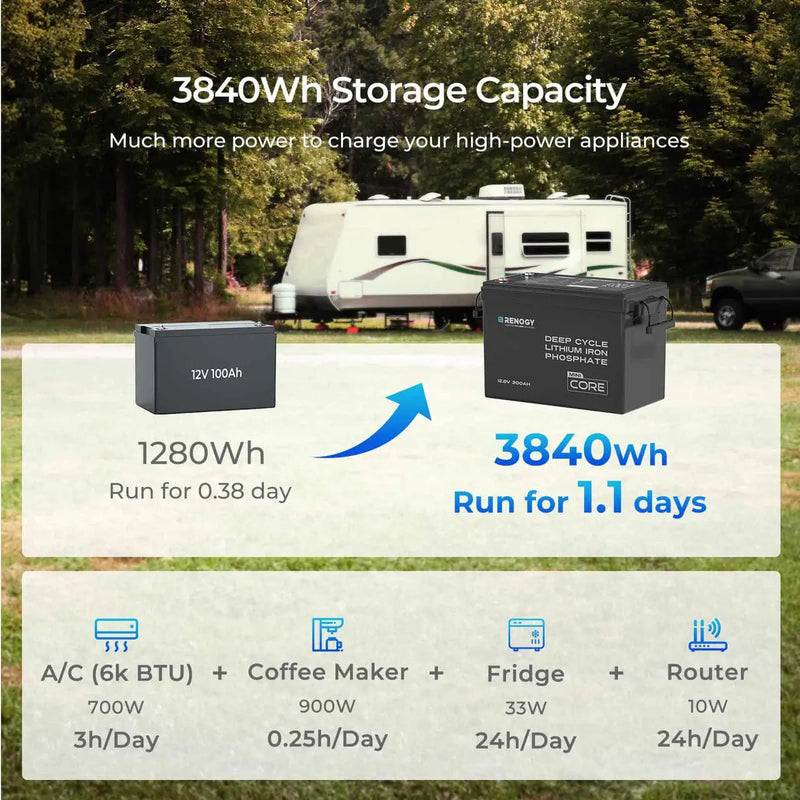
- Lighter than ever at 55.1 lb. 57% lighter than 12V 200Ah lead-acid.
- 3840Wh capacity. Max 4P4S, expandable to 61.44kWh.
- Low-temperature protection (charge <32°F, discharge < -4°F).
3. Renogy Pro S1 12V 120Ah / 240Ah LiFePO4 Battery
Renogy Pro S1 series LiFePO4 batteries can steadily deliver over 3000W output to run 99% of appliances in your motorhomes, such as air conditioners, coffee machines and hair dryers. Coupled with an ultra-long lifespan of 6,000 cycles (retaining 80% capacity), the Pro S1 series batteries can deliver 16+ years of reliable power with one full charge cycle per day. Plus, enjoy up to 7 years of warranty for long-term peace of mind.
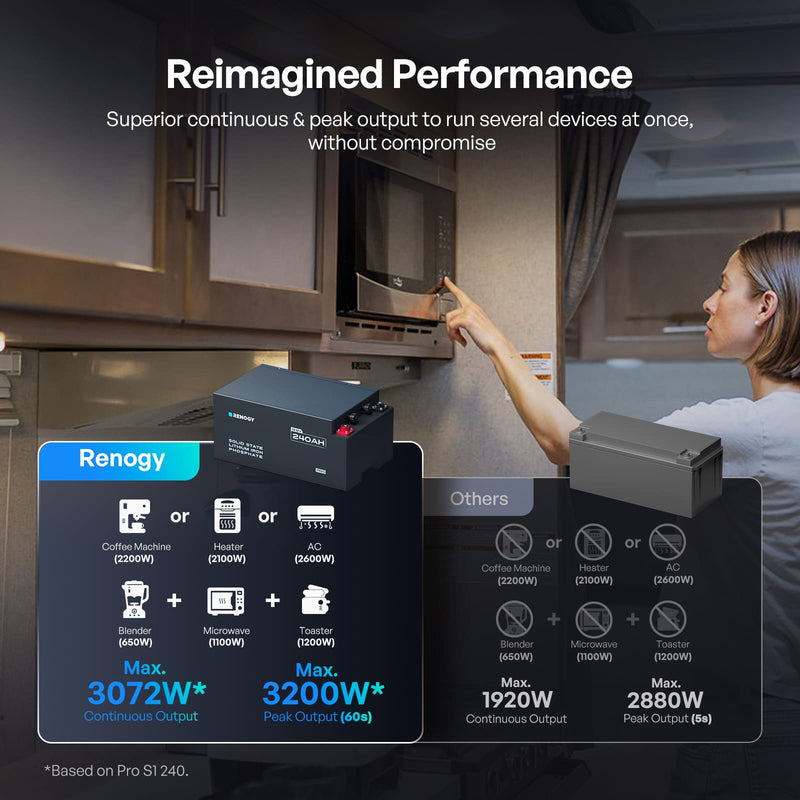
- Lighter than ever at 55.1 lb. 57% lighter than 12V 200Ah lead-acid.
- 3840Wh capacity. Max 4P4S, expandable to 61.44kWh.
- 1.6x longer Bluetooth range for easier remote monitoring.
Note: If you want to buy a new battery, ensure you consider its capacity, voltage/power ratings, lifespan, energy density, safety features, group size, weight, and size.
Conclusion
A LiFePO4 battery is the most stable, reliable, and long-lasting battery compared to all other lithium batteries available on the market, which is why it is rapidly replacing Li-ion batteries. It also performs better than non-lithium batteries like lead-acid and nickel-cadmium.
If you are wondering where you can use lithium iron phosphate batteries and why they have become so popular in the past few years, be sure to read the discussion above.
Frequently asked questions about lifepo4 batteries
Is LiFePO4 better than lithium?
Yes, LiFePO4 batteries are considered better than all other lithium batteries due to their higher stability, long life, low self-discharge ability, and enhanced safety.
Why is LiFePO4 so expensive?
Lithium iron phosphate batteries are costly due to their added safety features, the need for a battery management system, manufacturing approach, and of course raw materials.
How many years do LiFePO4 batteries last?
If you maintain them properly, these batteries can last between 5 and 10 years. Premium care can help your LiFePO4 batteries last for up to 10,000 charge cycles or even more.


