


200/400W N-Type Portable Solar Panel Blanket


E.Flex 100/200W N-Type Portable Solar Panel


Mini Size 12.8V 100Ah Lithium Iron Phosphate Battery


12V 104Ah Super Slim Lithium Iron Phosphate Battery | Rego Series


2000W 12V Pure Sine Wave Inverter Charger w/ LCD Display


1000W 12V Pure Sine Wave Inverter


ShadowFlux™ 120W/200W N-Type Anti-Shading Solar Panel

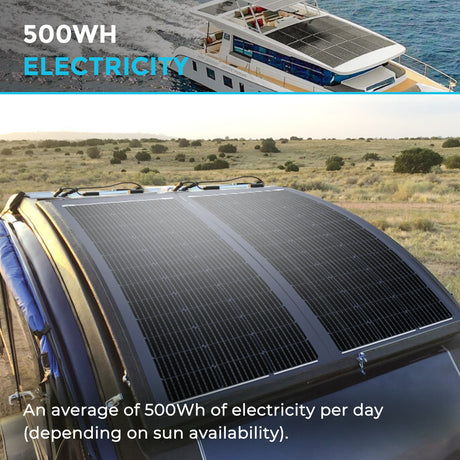
100W Lightweight Flexible Solar Panel(Black Division)

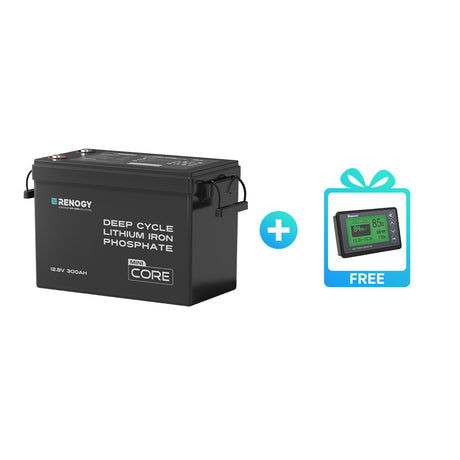
Mini Size 12V 300Ah LiFePO4 Battery w/ Low-Temperature Protection


Mini Size 12V 200Ah LiFePO4 Battery w/ Low-Temperature Protection


Rover 60 Amp MPPT Solar Charge Controller


Rover Li 20/30/40 Amp MPPT Solar Charge Controller


3000W/2000W/1000W 12V Pure Sine Wave Inverter with UPS Transfer Switch


REGO 3000W 12V Pure Sine Wave HF Inverter Charger Split-phase Design


200/400W N-Type Portable Solar Panel Blanket


E.Flex 30W Portable Solar Panel


320W N-Type Solar Panel(2-Pack)


590W N-Type Bifacial Solar Panel (2-Pack)
Mini Size 12V 300Ah LiFePO4 Battery w/ Low-Temperature Protection


12V 200Ah Smart LiFePO4 Battery w/ Bluetooth & Self-Heating | Pro Series


12V 30A/50A DC-DC On-Board Battery Charger with MPPT


12V/24V IP67 50A DC-DC Battery Charger with MPPT
3000W/2000W/1000W 12V Pure Sine Wave Inverter with UPS Transfer Switch

Need Help?
Speak with a Renogy Specialist
Monday-Friday, 6AM - 5PM (PT)
Call Us: 1 (909) 287 7111
Why Buy from Renogy Store?

See How They Play


Get Inspired by Our Community


Frequently Asked Questions
I'm new to solar. Where should I start?
I'm new to solar. Where should I start?
Choosing the right size is crucial for maximizing your investment. We recommend following these four steps:
Step 1: List Your Appliances and Calculate Your Daily Energy Need (in Watt-Hours)This is the foundation of your system. You need to know how much energy you use.
- Make a List: Write down every appliance you want to power.
- Find the Wattage: Check the label on each appliance for its power rating (in Watts, W).
- Estimate Usage Time: How many hours per day will you use each item?
- Calculate: For each appliance: Power (W) × Hours Used = Watt-Hours (Wh).
- Add It Up: Sum the Watt-Hours for all appliances. This is your total Daily Energy Consumption.
Example:
● LED Light (10W) used for 5 hours = 50 Wh
● Laptop (60W) used for 4 hours = 240 Wh
● Small Refrigerator (150W, cycles on/off) runs about 4 hours total = 600 Wh
● Total Daily Need: 50 + 240 + 600 = 890 Wh
Step 2: Assess Your Installation Space & Sunlight
The size of the solar system you can build is limited by the space you have available.
- Find Your Spot: Where will you put the panels? (e.g., Rooftop, yard, balcony?)
- Measure the Area: Get the length and width of your available space. This determines the maximum physical size and number of panels you can fit.
- Check for Sunlight: Does this spot get direct, unobstructed sunlight for most of the day (especially from 9 AM to 3 PM)? Avoid areas shaded by trees, chimneys, or other buildings.
Step 3: Size Your Battery Bank (Your Energy Storage)
Your battery capacity must be large enough to store the energy you use, especially when the sun isn't shining.
- Basic Rule: Your battery's usable capacity (in Watt-Hours) should be at least 20-30% more than your Daily Energy Consumption from Step 1.
- Consider "Days of Autonomy": How many cloudy days in a row do you want to power your essentials? If you want 2 days of power, double your needed capacity.
- Key Conversion: Battery capacity is often listed in Amp-Hours (Ah). Convert to Watt-Hours: Battery Voltage (V) x Amp-Hours (Ah) = Watt-Hours (Wh).
Example: For our 890 Wh daily need, a 12V 200Ah battery provides 12V x 200Ah = 2400 Wh. After accounting for a safe 50% depth of discharge, you have 1200 Wh of usable power—a good buffer for your 890 Wh need.
Step 4: Size Your Solar Panels (Your Energy Factory)
Your solar panels need to be powerful enough to recharge your battery bank on a typical day.
- Basic Rule: Take your Daily Energy Consumption (from Step 1) and divide it by the average Peak Sun Hours in your location.
- Formula: Total Solar Wattage Needed = Daily Watt-Hours ÷ Peak Sun Hours
Example: For 890 Wh in a location with 4.5 peak sun hours: 890 Wh ÷ 4.5 h ≈ 200 Watts of solar panels. We'd recommend rounding up to 250W-300W to account for system losses and less-than-perfect days.
Step 5: Choose Your Inverter and Charge Controller
- Inverter: Its power rating (in Watts) must be higher than the total combined wattage of the appliances you might run at the same time. (e.g., fridge kicking on + TV + lights).
- Charge Controller: It must match the voltage of your system (e.g., 12V, 24V) and be able to handle the current from your solar panels.
If you have any questions during the calculation or selection process, please feel free to contact our customer service team.
How can I check if this product is compatible with my existing system/device?
How can I check if this product is compatible with my existing system/device?
We provide detailed compatibility lists for all our products on their respective product pages. Please go to the detailed product description page and look for the "Specs" section.
If you have a specific model number of the device you want to pair it with, feel free to contact our support team with that information for a definitive answer.
Are there any ongoing promotions or discount codes?
Are there any ongoing promotions or discount codes?
We frequently run promotions and seasonal sales! For new customer, the best way to to subscribe to our newsletter ang receive 6% off code! All active promo codes can be applied at checkout.
Where can I find the installation manual?
Where can I find the installation manual?
All product manuals are available for download in the "Download" on the product page.
Is this item in stock and ready to ship?
Is this item in stock and ready to ship?
Our website's inventory is live and updated in real-time. If a product page allows you to add it to your cart, it is in our warehouse and ready for shipment. Items with low stock will be clearly marked.

