


Living through a power outage can be a major inconvenience. One minute you're watching TV or working on your computer, and the next, everything goes dark. How do you keep the food in your fridge from spoiling? What if you need to run medical equipment or a sump pump in your basement? For many homeowners, a power outage isn't just an annoyance; it can be a serious problem. That's why having a generator is so important.
If you've started to look into backup power, you've probably asked the critical question: what size generator to run a house? The answer isn't one-size-fits-all, but this article will walk you through everything you need to know. We'll help you calculate your power needs, understand different types of generators, and choose the perfect one for your home so you're never left in the dark again.
Can a Solar Generator Power a House?
Indeed, your home can be powered by a solar generator. What size is best for you is the true question. Your particular needs, such as the size of your home and what you need to power during an outage, will determine the answer. A unit with a power output of 3,000 to 7,500 watts is a great place to start for an average home that wants to power a few essential items like a TV, some lights, and a refrigerator. A larger system—perhaps 15,000 watts or more—is required if your home is larger or if you wish to power more high-demand appliances like an electric water heater or central air conditioner.
What Is a Solar Generator For a House?
A solar generator is like a big, portable power bank that the sun charges. A solar generator is different from a regular generator that runs on gasoline. It has solar panels that collect sunlight, a battery that stores the energy, and an inverter that turns that energy into electricity that you can use in your home.
The solar panels take in sunlight and turn it into direct current (DC) electricity. The system's battery then stores this DC power. When you need to use your appliances, the battery sends stored DC power to a pure sine wave inverter. The inverter's job is to change the DC electricity into AC electricity, which is what most household appliances use. Then, this smooth, stable AC power is sent to your appliances, which run just like they would if they were plugged into a wall outlet. This process makes solar generators a quiet, clean option for backup power at home.
A solar generator can power a whole house, but the efficiency it will be able to achieve will be relative to the size of the unit and how much power is needed in your home. Below is an estimated list of solar generator sizes relative to the average type of dwelling:
- Small Houses/Apartments (1,500 - 3,000 Watts): Ideal for running a few basics like a refrigerator, some lights, and powering gadgets.
- Average-Sized Houses (3,000 - 7,500 Watts): Can handle a more extensive range of appliances, including a sump pump, microwave, or TV.
- Large Houses (7,500+ Watts): Can handle more energy-intensive appliances, like a well pump, electric range, or even a central air conditioning system.
What Size Generator Do I Need For My House?
Figuring out the right size generator for your home can feel complicated, but it all comes down to one thing: wattage. Wattage is simply the amount of power an appliance uses to run. To get the perfect fit, you first need to decide what you absolutely must have running during a power outage. Do you just need to keep your refrigerator and a few lights on, or do you want to power everything, including your central air conditioning?
Once you have your list, find the wattage for each item. You can usually find this on the appliance's label or in its user manual. Don't forget to account for "starting wattage," which is the brief surge of power some appliances—like refrigerators or sump pumps—need to turn on. Add up the running watts of everything on your list, then add the single highest starting wattage to that total. This gives you the minimum wattage your generator needs to produce.
What Size Solar Generator Do You Need Based on Home Square Footage
While individual power needs vary, here is a general breakdown of what size generator is typically needed based on square footage:
- Homes up to 1,500 sq. ft.: A 5,000-7,500-watt generator is usually sufficient for covering critical items like your refrigerator, lights, and a few small electronics.
- Homes between 1,500-2,500 sq. ft.: A 7,500-12,000-watt generator can handle more, including a well pump, microwave, or a television, providing more comfort during an outage.
- Homes between 2,500-4,000 sq. ft.: A 12,000-20,000-watt generator is ideal for powering major household systems, such as a central air conditioning unit or electric range.
- Homes over 4,000 sq. ft.: For very large homes with extensive power needs, a 20,000-watt or larger generator can run nearly everything, offering full backup power.
What Size Solar Generator Do You Need Based on Household Size
While square footage is a good guide, the number of people in your home is also a great way to estimate your power needs. More people typically means more devices to charge and more appliances running at the same time. This translates directly into a need for more power.
Here's a simple breakdown based on household size:
- 1-2 people: A 3,000-watt generator can easily handle a few personal electronics and essential appliances like a fridge.
- 3-4 people: A 5,000-watt unit is a solid choice to keep a wider range of items running for a small family.
- 5+ people: For larger families, a 7,500-watt or larger generator is recommended to meet the demand of multiple users and their devices.
What Size Generator Do I Need For My House Chart
The best way to figure out what size generator you need is to make a simple plan. Instead of guessing, you can quickly estimate your power requirements by listing out the specific items you want to keep running during an outage. This is where a chart comes in handy.
Below is a general guide to help you estimate the wattage of common household appliances. To use it, simply list out the items you need, find their estimated wattage from the chart, and add them all together. Remember to pay close attention to the starting wattage for items with motors, as this is the temporary surge of power they need to turn on. Your generator's total capacity should be able to handle the combined running wattage of all your appliances, plus the single highest starting wattage of any appliance you'll be starting.
| Category | Appliance | Wattage (W) | Daily Usage (Hours) | Total Energy (Wh) |
| Kitchen Essentials | Microwave Oven | 1500W | 0.25H | 375Wh |
| Refrigerator | 400W | 8H | 3200Wh | |
| Coffee Maker | 400W | 1H | 400Wh | |
| Rice Cooker | 700W | 1H | 700Wh | |
| Electric Kettle | 1500W | 0.2H | 300Wh | |
| Climate & Comfort | Fan (Summer) | 30W | 3H | 90Wh |
| Electric Blanket (Winter) | 80W | 4H | 320Wh | |
| Space Heater | 1500W | 2H | 3000Wh | |
| Air Conditioner | 1000W | 4H | 4000Wh | |
| Humidifier | 40W | 6H | 240Wh | |
| Lighting & Cleaning | Lamps / Lights | 30W | 4H | 120Wh |
| Vacuum Cleaner | 700W | 0.5H | 350Wh | |
| Air Purifier | 50W | 8H | 400Wh | |
| Personal Electronics | Phone Charger | 18W | 4H | 72Wh |
| Laptop | 65W | 1H | 65Wh | |
| Tablet | 20W | 2H | 40Wh | |
| TV | 120W | 3H | 360Wh | |
| Wi-Fi Router | 10W | 24H | 240Wh | |
| Health & Baby Care | Bottle Sterilizer | 200W | 0.5H | 100Wh |
| CPAP Machine | 30-60W | 8H | 240-480Wh | |
| Hair Dryer | 1200W | 0.25H | 300Wh | |
| Electric Toothbrush Charger | 5W | 1H | 5Wh |
Renogy Solar Kits to Run a House
For homeowners looking to invest in a reliable, scalable solar power system for backup, Renogy offers a range of kits that provide all the core components needed to build a custom solution. Unlike simple power stations, these kits are designed to be integrated into your home, giving you the flexibility to power exactly what you need. Here are three popular options to consider, from essential to whole-home power.
Renogy 400W 12-Volt Complete Solar Kit
This 400W 12-Volt Complete Solar Kit is a fantastic entry point for anyone wanting to power the essentials during an outage. Designed to be a complete, all-in-one solution, it comes with everything you need right out of the box—four 100W solar panels, a charge controller, and two deep-cycle batteries. The 400W capacity is ideal for providing consistent power to a small cabin, shed, or RV, easily keeping your refrigerator, a few lights, and essential personal electronics running. It's a perfect, user-friendly system for peace of mind.

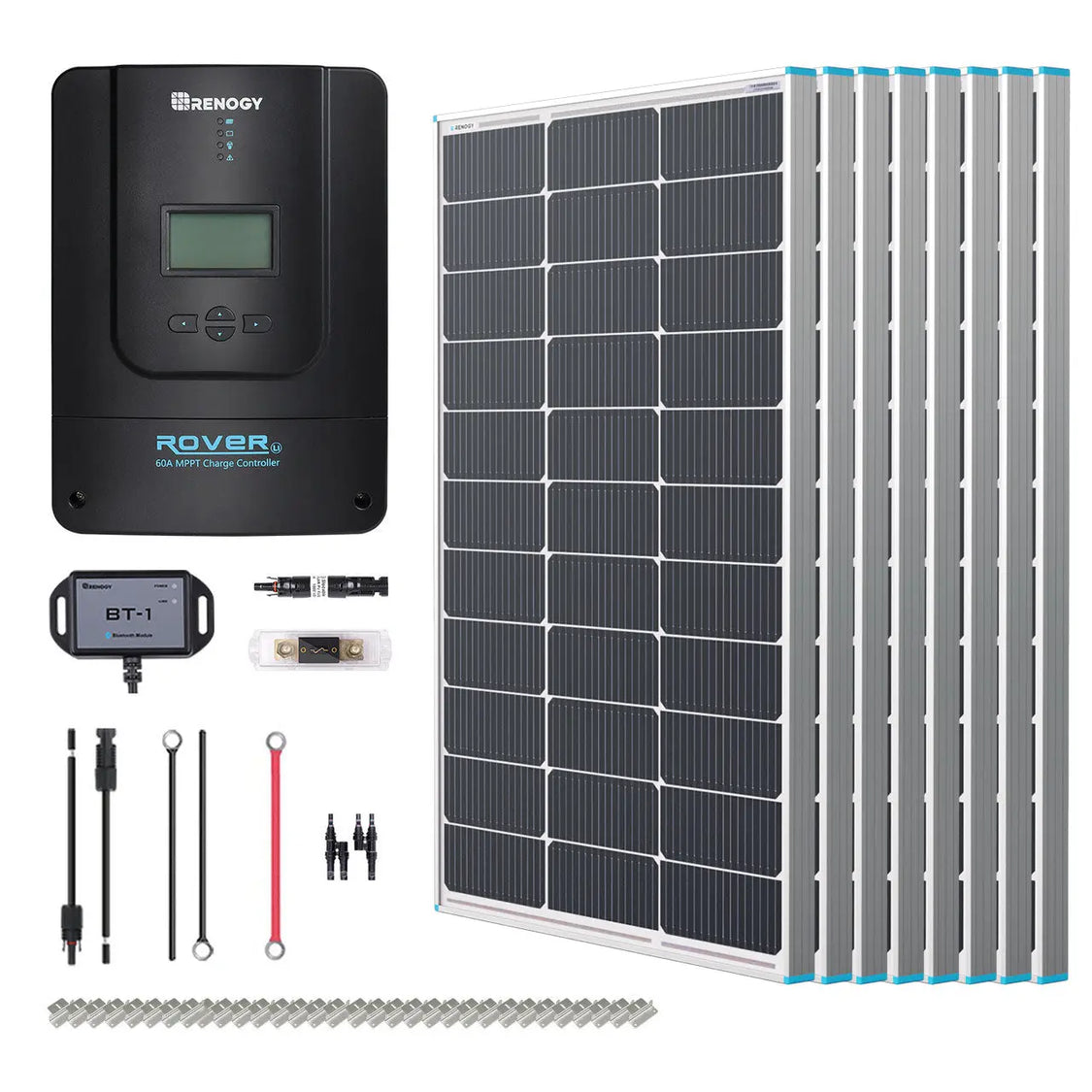
Renogy 800W 12V/24V Monocrystalline Solar Premium Kit
If you need a more robust system with room to grow, the 800W 12V/24V Monocrystalline Solar Premium Kit is an excellent choice. This premium kit features high-efficiency monocrystalline solar panels and an advanced MPPT charge controller, which maximizes the power collected from the sun. The higher 800W output is perfect for a medium-sized home, allowing you to run more demanding appliances like a well pump, microwave, or television. While the batteries are typically sold separately, this gives you the freedom to choose the exact battery bank that best fits your specific power and budget needs.
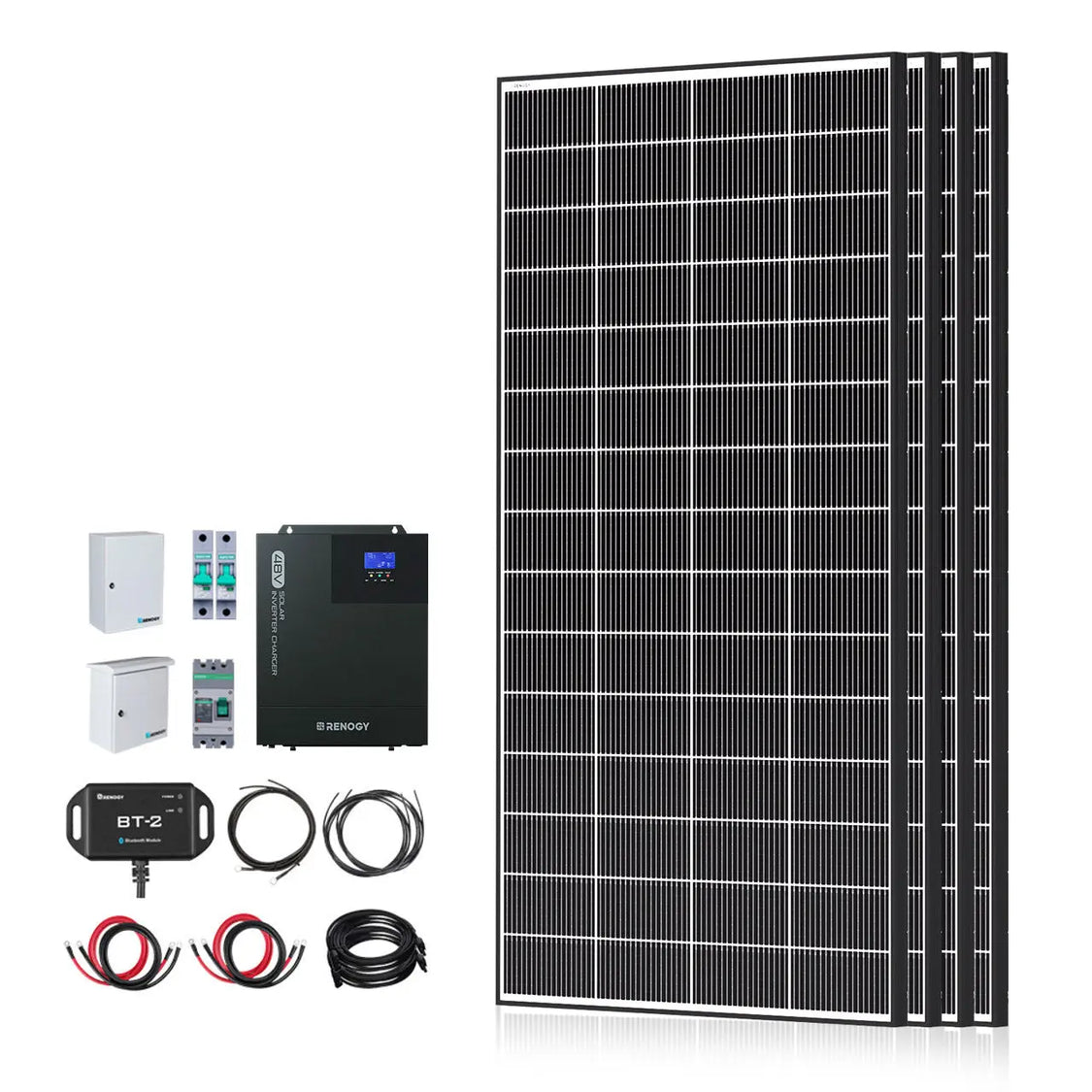
Renogy 1200W/2500W Tiny House Home Cabin Kit
For those with a big power appetite, the Tiny House Home Cabin Kit is a complete off-grid powerhouse. With a wattage range from 1200W to over 2500W, this kit is designed to serve as a comprehensive backup solution for a full-sized home or cabin. It includes a powerful inverter to handle major appliances like an electric stove or central air conditioning. This kit provides the foundation for energy independence and is the perfect option for homeowners who want to ensure their entire household remains powered, even during long-term grid failures.
FAQs About Solar Generator For Home
How long can a whole house generator run continuously?
A whole-house generator's run time depends on its fuel source. A natural gas generator can run indefinitely as long as the gas supply is not interrupted. For a propane-powered model, a typical 500-gallon tank can keep a mid-sized generator running for about 5 to 7 days. Solar generators can also run continuously, recharging their batteries during the day to provide power all night.
How much does a solar generator for a house cost?
The cost of a solar generator for a house varies widely depending on its size and power output. Small, portable units capable of powering a few essential devices can start at a few hundred dollars. In contrast, large-scale systems designed to back up an entire home can range from a few thousand dollars to well over $10,000, depending on your needs.
Inverter or generator: which is best for home use?
Both have their pros and cons. An inverter generator is typically the best choice for home use because it produces clean, stable power that is safe for sensitive electronics. They are also much quieter and more fuel-efficient. A traditional generator is often louder and less efficient but is a good option for powering tools and other heavy-duty equipment.
Final Thoughts
Although choosing the right generator size for a home may seem difficult, you can make an informed decision if you know your home's specific power requirements. In order to choose a system that is ideal for your requirements, it is crucial to go beyond conjecture and determine the wattage of the appliances you actually need to power during an outage.
Even though any generator is better than none at all, solar kits, such as those offered by Renogy, provide a scalable, silent, and clean substitute for conventional models. With the help of these systems, you can create a dependable power solution that expands with you, giving you a sustainable means of keeping your family comfortable and your lights on regardless of what happens to the grid.


