

Key Takeaways
1. LiFePO4 (lithium iron phosphate) batteries can endure over 4,000 full charge-discharge cycles, often lasting more than ten years with daily use.
2. Proper storage and maintenance are key to maximizing the lifespan of your LiFePO4 battery.
3. For LiFePO4 batteries, maintaining a moderate DoD, typically around 80%, can significantly extend their life.
Are you curious about the lifespan of LiFePO4 batteries? LiFePO4 batteries, known for their stability and efficiency, have revolutionized energy storage. In this article, we'll dive into the factors affecting LiFePO4 battery life, exploring their impressive cycle count and years of service.
What is a LiFePO4 (lithium iron phosphate) battery?
LiFePO4, or lithium iron phosphate, batteries are an advanced type of lithium-ion battery that uses lithium iron phosphate as the cathode. This makes them more stable and safer than conventional lithium-ion batteries.

LiFePO4 batteries offer consistent voltage, long cycle life, and enhanced safety. They can endure thousands of charge-discharge cycles with minimal degradation, making them ideal for renewable energy systems, electric vehicles, marine applications, and off-grid power solutions.
How long do LiFePO4 batteries last?
LiFePO4 (lithium iron phosphate) batteries can endure over 4,000 full charge-discharge cycles, often lasting more than ten years with daily use. Their stable chemistry minimizes degradation, reducing replacements and long-term costs.
A cycle is one complete charge and discharge. Even under typical operating conditions, these batteries offer far greater longevity than most lithium-ion types, making them ideal for solar storage, EVs, and frequent use scenarios.

Factors like depth of discharge, charging method, and environment can affect lifespan, but LiFePO4 consistently provides reliable, long-term energy. Renogy LiFePO4 batteries deliver durable, efficient power for years.

Factors Affecting LiFePO4 Battery Life
LiFePO4 batteries are durable, but several key factors influence their longevity. Understanding these helps maximize performance and lifespan.
1. Depth of Discharge (DoD)
Using too much of the battery's capacity before recharging can shorten life. Keeping DoD around 80% preserves longevity.
2. Charging Method
Use a charger designed for LiFePO4 to maintain correct voltage and current. Avoid overcharging or undercharging to protect the battery.
3. Operating Temperature
Best performance occurs between 0°C and 45°C. Extreme heat or cold can degrade performance. Insulation or cooling helps maintain optimal conditions.
4. Storage Conditions
For long-term storage, keep the battery in a cool, dry place at ~50% charge to prevent capacity loss and maintain integrity.
5. Usage Patterns
Regular use keeps the battery chemistry active. Long inactivity can cause self-discharge and chemical imbalances.
6. Battery Quality
High-quality batteries from reputable manufacturers perform better and last longer than lower-quality alternatives.
By managing discharge, charging, temperature, storage, usage, and choosing quality products, you can extend your LiFePO4 battery's life and ensure reliable power for years.
How do you properly store and maintain a LiFePO4 battery to extend its lifespan?
Proper storage and maintenance are key to maximizing the lifespan of your LiFePO4 battery. By following these best practices, you can ensure that your lithium iron phosphate battery remains reliable and efficient for years to come.

1. Store at the Right Temperature
LiFePO4 batteries should be stored in a cool, dry place. The ideal storage temperature is between 0°C and 25°C (32°F to 77°F). Avoid exposing the battery to extreme temperatures, as both excessive heat and cold can degrade its performance and shorten its lifespan.
2. Maintain a Partial Charge
For long-term storage, keep your LiFePO4 battery at a partial state of charge, ideally around 50%. Storing the battery fully charged or completely discharged can lead to capacity loss over time. A partial charge helps maintain the battery’s chemistry and prolong its life.
3. Use a Suitable Charger
Always use a charger designed specifically for LiFePO4 batteries. A suitable charger will ensure that the battery is charged at the correct voltage and current levels, preventing overcharging and undercharging. Proper charging is essential for maintaining battery health.
4. Avoid Over-Discharging
While LiFePO4 batteries are known for their durability, repeatedly discharging them to very low levels can reduce their lifespan. Try to keep the depth of discharge (DoD) moderate, ideally not going below 20% capacity before recharging.
5. Keep It Clean and Dry
Ensure that the battery terminals and casing are kept clean and free from moisture. Dirt and moisture can cause corrosion and electrical issues. Regularly inspect the battery for any signs of damage or wear, and clean it with a dry cloth if necessary.
Lithium Iron Phosphate Batteries Recommended
Here’s a quick look at some of the top-performing LiFePO4 batteries available in the United States. Among them, Renogy’s LiFePO4 batteries stand out for their consistent quality, rigorous safety standards, and reliable performance in various applications.
1. Renogy 12.8V 100Ah LiFePO4 mini battery
Renogy 12.8V 100Ah LiFePO4 mini battery is the Renogy's smallest lithium iron phosphate battery. It comes with a low-temperature cut-off feature to ensure safe charging in freezing temperatures. You can monitor the battery stats by using it with a 300A battery shunt. Moreover, this battery is vibration-resistant and IP65-rated for an unmatched outdoor performance.
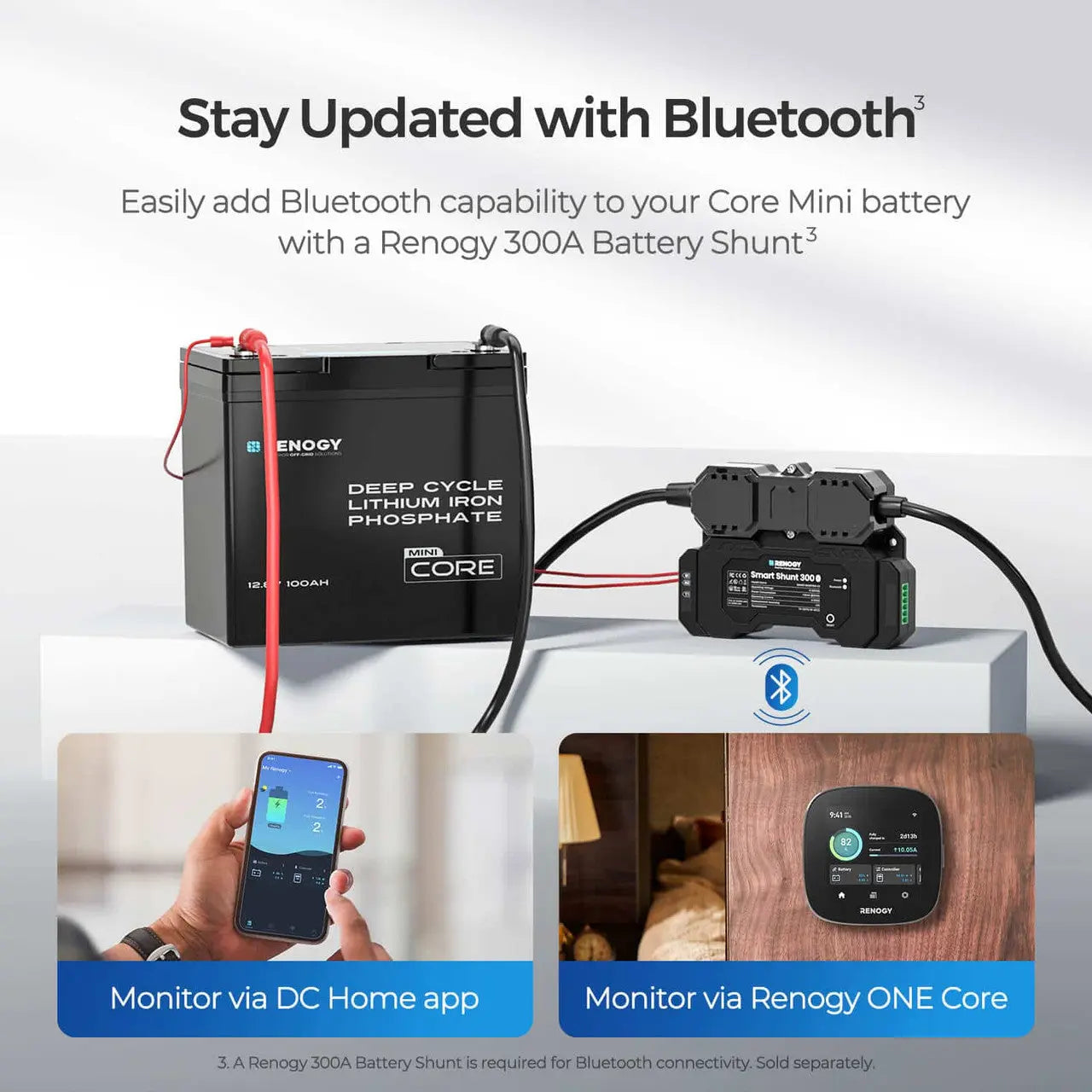
- Renogy's smallest 12.8V 100Ah LFP Battery.
- Low-temperature cut-off for safer charging in freezing weather.
- Can be mounted on its sides to fit in cramped spaces.
2. Renogy 12V 300Ah deep cycle LiFePO4 battery
Renogy 12V 300Ah deep cycle LiFePO4 battery is known for delivering 59% more power than a 200Ah same-sized lithium iron phosphate battery. It offers low-temperature protection and supports series-parallel, parallel, or series connections. The self-heating feature makes this battery a perfect choice for all-weather living. 24-hour timely assistance and 5-year product warranty adds more value to the credibility of this battery.
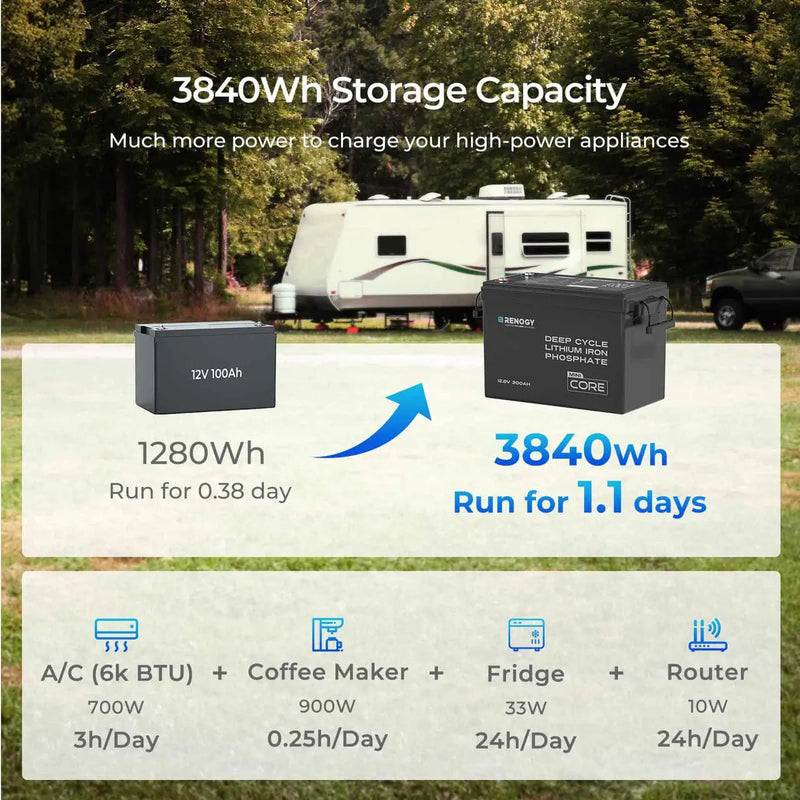
- Lighter than ever at 55.1 lb. 57% lighter than 12V 200Ah lead-acid.
- 3840Wh capacity. Max 4P4S, expandable to 61.44kWh.
- Low-temperature protection (charge <32°F, discharge < -4°F).
3. Renogy Pro S1 12V 120Ah / 240Ah LiFePO4 Battery
Renogy Pro S1 series LiFePO4 batteries can steadily deliver over 3000W output to run 99% of appliances in your motorhomes, such as air conditioners, coffee machines and hair dryers. Coupled with an ultra-long lifespan of 6,000 cycles (retaining 80% capacity), the Pro S1 series batteries can deliver 16+ years of reliable power with one full charge cycle per day. Plus, enjoy up to 7 years of warranty for long-term peace of mind.
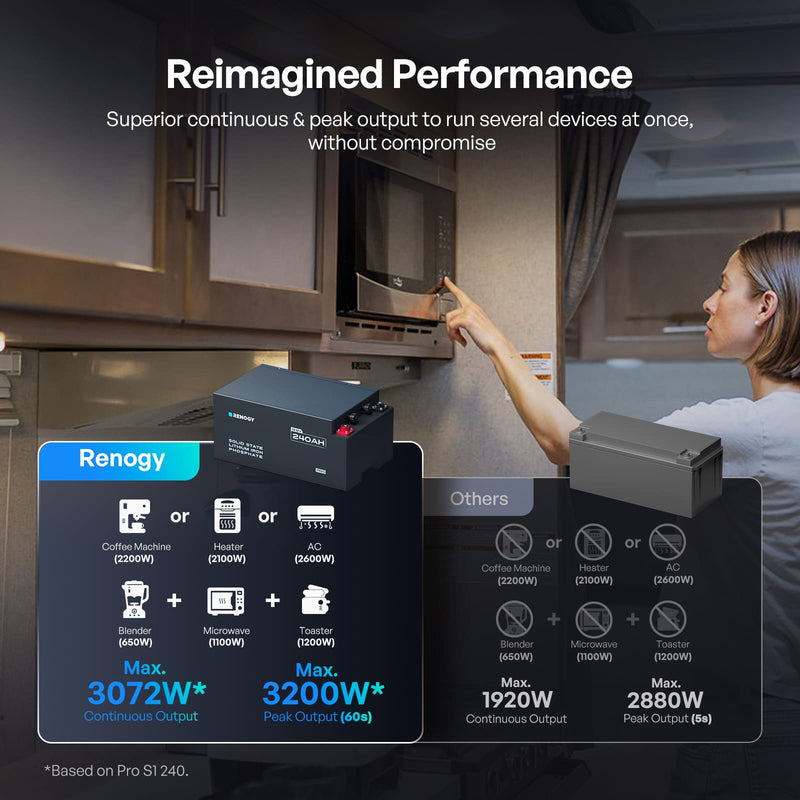
- Lighter than ever at 55.1 lb. 57% lighter than 12V 200Ah lead-acid.
- 3840Wh capacity. Max 4P4S, expandable to 61.44kWh.
- 1.6x longer Bluetooth range for easier remote monitoring.
Conclusion
LiFePO4 batteries are revolutionizing energy storage, from powering off-grid homes to propelling electric vehicles. Among the leaders in this field, Renogy stands out with their high-quality LiFePO4 batteries. Known for reliability and performance, Renogy's offerings are ideal for solar setups and mobile power needs. Whether you're an eco-conscious homeowner or an adventure seeker, investing in LiFePO4 technology, particularly from trusted brands like Renogy, could be your key to unlocking long-term, efficient energy storage.
FAQs about lifepo4 battery life
1. How long will a 100Ah LiFePO4 battery last?
Depending on the load, a 100Ah LiFePO4 battery can run for 5 days or for 30 minutes. A 2,000W gadget would only last around 30 minutes, but a 20W device might run for almost 50 hours. Its entire lifespan, which may surpass 10 years with good care, is also influenced by factors like as working circumstances, charging techniques, and depth of discharge.
2. What are the disadvantages of LiFePO4?
Some of the disadvantages of employing LiFePO4 batteries are their reduced energy density, greater cost, slower charging speed, lower discharge rate, and limited temperature range. Notwithstanding these drawbacks, their longevity and stability frequently surpass these restrictions, making them a well-liked option for a range of applications.
3. What is the service life of a LiFePO4 battery?
Under the same operating circumstances, the service life of a LiFePO4 battery generally varies from 7 to 8 years, whereas lead-acid batteries have a lifespan of around 1 to 1.5 years. LiFePO4 batteries offer dependable, long-lasting performance for more than 4,000 cycles, which makes them an economical and long-lasting energy storage option.


