


If you're considering beginning your off-grid journey, you might need to know how much solar power do your house need before buying solar panels to build a independent solar power system. The exact number you need will depend on the size of your home, your electricity usage and the angle shadding and orientation of your roof. On average, you might need between 15 and 20 solar panels to fully power a typical home in US. and the angle, shading and orientation of your roof are key factors in determining how many solar panels you need.
Why Should You Use Solar Power In Your Tiny House?
Tiny homes are all about maximizing efficiency in a minimal space, and what better way to extend that philosophy than by embracing solar energy?
With the tiny home market poised to reach an impressive $6.9 billion by 2029, more and more people are seeking out sustainable, flexible, and cost-effective living solutions. Let's delve into some key benefits that make solar power a compelling choice for tiny homeowners.
Savings
One of the main pain points for any homeowner is utility costs. For tiny homeowners, the motivation is even stronger; 80% cite financial savings as a key factor in their decision to go solar.
By generating your own electricity, you can dramatically cut down your energy bill. Given that the system's weight and dimensions are tailored for tiny homes, you can maximize efficiency without cluttering your limited space.
Eco-Friendly Living
As we collectively move toward a greener future, solar energy stands out as a sustainable choice. This is particularly true for tiny homeowners, as 35-40% of them already live completely off-grid. Solar power reduces your carbon footprint and aligns perfectly with the ethos of tiny home living, which often embraces a more sustainable, back-to-basics approach to life.
Mobility
One unique aspect of tiny homes is their mobility; 75% are on wheels and move at least once a year. Solar power systems can be just as mobile. With clever roof-mounted or ground-mounted installations, you can easily set up and dismantle your solar panels whenever you decide to change your scenery, making it a seamless part of your nomadic lifestyle.
Increased Home Value
Beyond the immediate benefits, installing a solar power system can significantly increase the value of your tiny home. A solar setup can be a powerful selling point, emphasizing savings and eco-friendliness while future-proofing the home. As more people become environmentally conscious, a tiny home equipped with a solar power system becomes an increasingly attractive option in the market.

How Much Solar Power Do I Need for My Tiny House
Before you can set up a solar energy system that meets your needs, you need to understand just how much energy those needs require. It’s not just about figuring out how many solar panels are needed to run a house off-grid — you also need to properly size the entire off-grid solar system, including power generation, battery storage, inverter capacity, and electrical safety, to ensure stable and reliable energy use.
There are two simple ways to estimate your energy usage: check your electricity bills for average daily consumption, or list the appliances you plan to use and calculate their daily power usage.
To make things easier, here’s a simple example you can follow to estimate your tiny home’s energy needs:
To calculate daily energy consumption, multiply the appliance wattage by the number of hours used per day. For example, a 10W LED bulb used for 5 hours consumes 50Wh per day.
Once you total your daily energy usage, you can properly size your solar panels, batteries, inverter, and other system components. This helps avoid building a system that is either too small or unnecessarily oversized.
Once you’ve mastered this method, you’ll be able to calculate solar power requirements for any scenario. Whether you’re figuring out how many solar panels you need for RV living or for a road trip, it’s a breeze.
And don't forget, tools like the Renogy solar panel calculator are there to guide you through this process, making it even more straightforward.

How Many Solar Panels Do I Need for My House?
After figuring out how much energy your tiny home needs. The next logical question is: how many solar panels will it take to generate that energy? There is no one-size-fits-all answer; it varies based on several factors unique to you and your home, including:
Your Energy Consumption
That handy table you made to calculate your daily energy needs can be a good starting point here. The more devices and appliances you power, the more solar panels you need.Also, you can look at your electricity bill to find out how much energy your household consumes in a month. This is typically measured in kilowatt-hours (kWh). If your monthly energy consumption is 900 kWh, your daily usage is approximately 30 kWh (900 kWh / 30 days).
The Peak Sunlight Hours in Your Area
Research the average peak sunlight hours for your location. This is the number of hours per day when sunlight is strong enough to generate significant power.
Space
Solar panels need room to soak up the sun, and tiny homes aren't exactly known for their expansive roof space. However, if the roof can't accommodate your solar dreams, consider using ground and pole mounting options. Additionally, high-efficiency panels may cost more upfront but generate more power in less space. This is a boon for tiny homes where space is at a premium.
Location
Your geographical location affects how much sunlight your panels will receive. The angle of your panels can be adjusted to maximize sun exposure, optimizing the energy you can produce each day.
For context, imagine your tiny home needs 24,000 watt-hours per day. A single 250-watt panel soaking up sunlight for 8 hours can generate 2,000 watts a day. Doing some quick math, you'd need about 12 panels to meet your daily energy consumption.
Solar panel wattage
Also referred to as a solar panel's power rating, panel wattage indicates the electrical output of a particular solar panel under good conditions. Wattage is measured in watts (W), check the wattage rating of the solar panels you intend to install. Solar panels typically range from 250 watts to 400 watts each.
Building a Solar System for Your Tiny Home Step-by-Step
Say you decide that solar energy is the way to go for your tiny home—fantastic choice! The question is: how do you go from idea to implementation? No need to worry; we have you covered.
Here’s a step-by-step guide to illuminate your solar journey:
Step 1: Set a Budget
Like any major project, setting a realistic budget is essential. Solar panels, charge controllers, inverters, batteries, and installation all come with costs. Knowing your budget will help you decide which components to splurge on and where you can save.
Step 2: Decide Where It Will Go (Rooftop vs. Ground)
Since space is often a premium in tiny homes, you need to decide whether your solar array will go on the rooftop or require a ground-based system. Ground systems are easier to clean and maintain but may take up valuable land space. Rooftop systems are space-efficient, but consider the weight and whether your structure can handle it.
Step 3: Choose Your Solar Panels
With your budget and placement decided, it's time to pick your panels. Remember, efficiency is a priority, especially when working with limited space. Look for high-quality panels that provide the most power for their size.
Step 4: Find a Racking System
The racking system holds your panels in place, either on the ground or on your roof. Choose one that is durable and suited to your specific setup. Ground systems often require a more robust frame, while rooftop systems need to be lightweight yet secure.
Step 5: Put It All Together
Now that you have all the pieces to your solar puzzle, it's time to put it all together. Wiring your system is a crucial step for optimal performance, and doing so correctly will help you get the most out of your solar panel system.
Unless you have experience working with electrical systems, we recommend seeking professional help. Our experts at Renogy can guide you through the process to ensure everything runs smoothly and safely.

How to Choose the Best Solar Power Kit for a Tiny House or Small Cabin
Building a reliable off-grid solar power for small house can quickly become complicated. Many DIY users struggle with component compatibility, battery communication issues, wiring mistakes, and choosing the right inverter or charge controller size.
The Renogy 400W 12V Complete Solar Panel Kit with 3.6kWh Battery simplifies the process by combining all the essential components into one ready-to-build solution for cabins, sheds, workshops, and tiny homes.
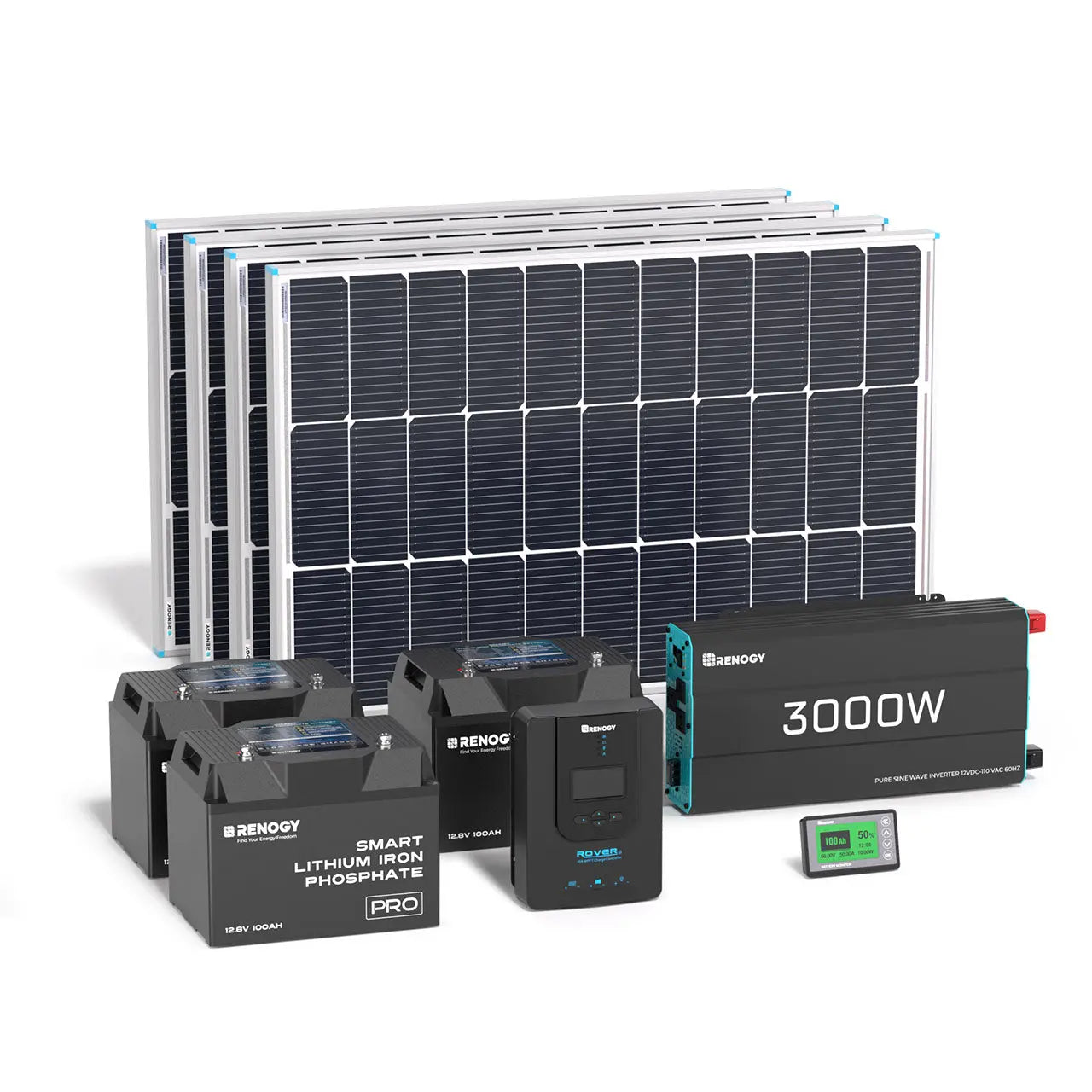
Ideal For: Small cabins, tiny homes, workshops, sheds, RVs, and weekend off-grid retreats.
- 400W Complete Solar Kit — Designed for DIY off-grid power projects and small cabin energy systems.
- 4×100W N-Type Solar Panels — Up to 25% efficiency for higher solar output in limited roof space.
- 3.6kWh Energy Storage — Available with AGM or Lithium batteries depending on your budget and power needs.
- 3000W Pure Sine Wave Inverter — Safely powers lights, laptops, TVs, coffee makers, tools, and other AC appliances.
- Rover 40A MPPT Charge Controller — Uses a 4-stage charging algorithm to protect battery health and improve charging efficiency.
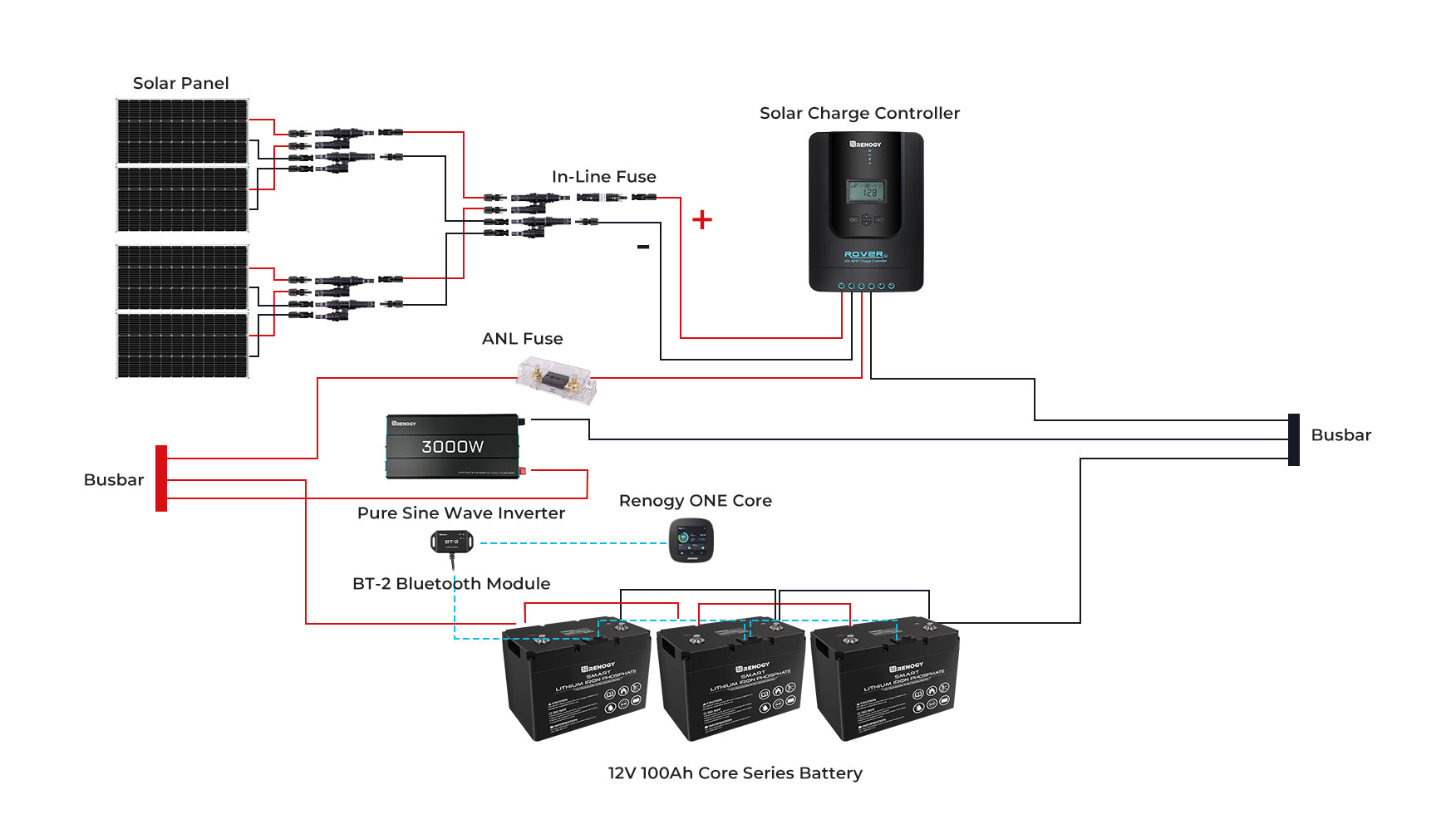
Need more storage capacity for full-time tiny house living? Renogy also offers larger systems including 10.8kWh and 14.4kWh Tiny Home Power Kits for higher daily energy usage, larger appliances, and long-term off-grid living.
FAQs about solar panels for tiny house
Can I Run My Whole House on Solar Power?
Yes, you can run your entire home on solar power as long as your electrical system is 100% compatible with enough solar panels for your annual electricity usage.
How Many Solar Panels Do I Need for a 2000 Square Feet Home?
You’ll likely only need about 10 to 17 solar panels to power your 2000 square feet home each month.
Conclusion
In conclusion, determining the right amount of solar power for your tiny house involves a few essential calculations and considerations. By assessing your daily energy consumption, factoring in your location's peak sunlight hours, and selecting the appropriate solar panel system, you can efficiently power your tiny home with renewable energy.


