


Key Takeaways
1. An RV solar kit provides a complete off-grid power solution for RVs and travel trailers.
2. Choosing the right system depends on your energy needs, battery capacity, and travel style.
3. Solar panels alone are not enough—battery storage is essential for reliable power.
4. Complete solar kits are easier to install and more efficient than individual components.
5. The right setup can reduce energy costs and improve energy independence on the road.
This guide will help you understand how RV solar systems work and how to choose the best RV solar panel kit based on your needs.
What Is an RV Solar Kit?
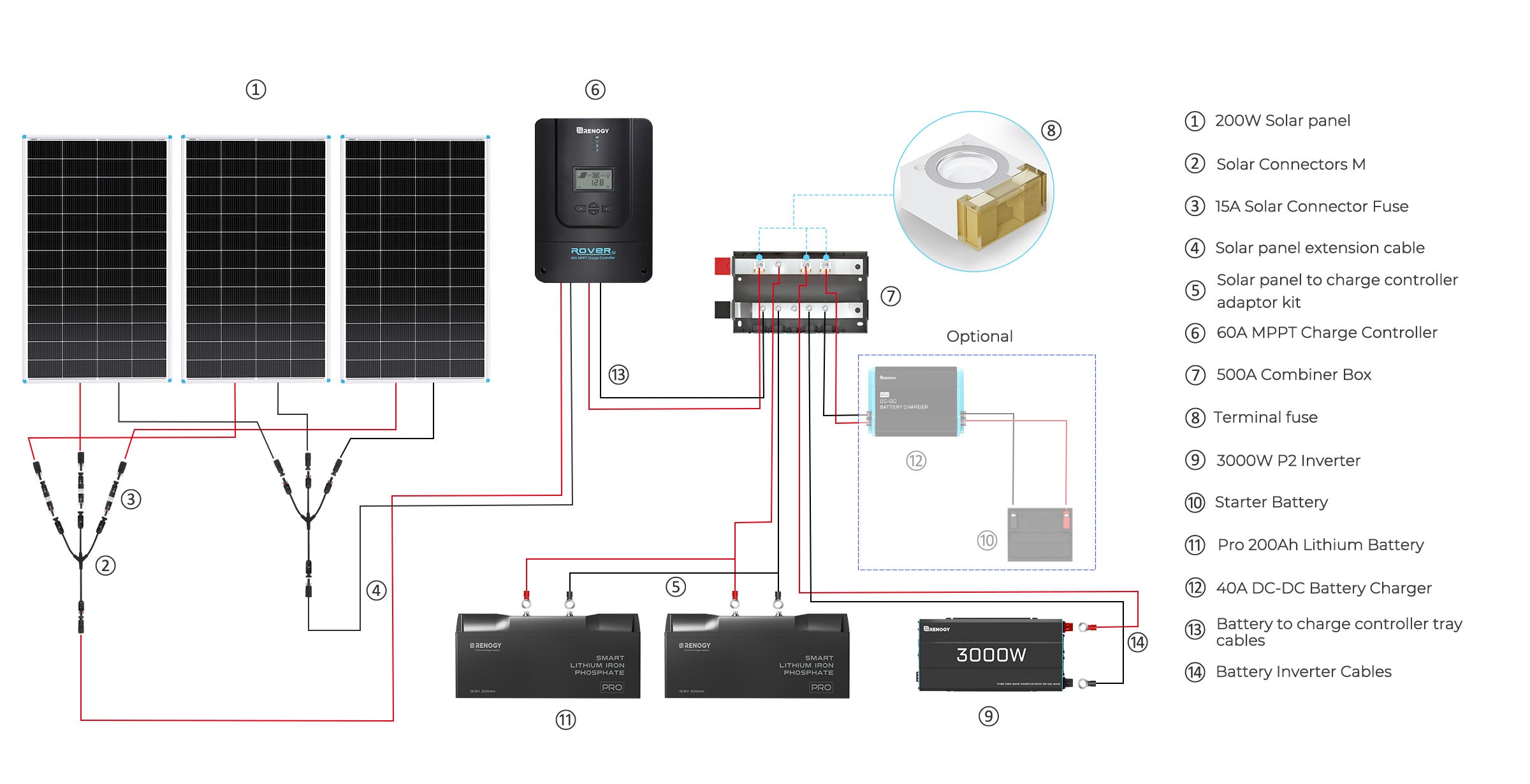
An RV solar kit is a complete solar power system designed specifically for recreational vehicles, motorhomes, and travel trailers.
A typical RV solar panel kit includes:
- Solar panels
- Charge controller
- Battery (usually lithium or AGM)
- Inverter
- Mounting hardware and cables
Unlike buying individual components separately, a complete RV solar system is pre-configured to work together, making installation easier and more reliable—especially for beginners.
RV Solar Kit vs Individual Solar Panels
Many RV owners start by looking at solar panels for RV use, but quickly realize that panels alone are not enough.
| Option | Pros | Cons |
|---|---|---|
| Solar panels only | Lower upfront cost | Complex setup, compatibility issues |
| RV solar kit | All-in-one solution, easier install | Slightly higher upfront cost |
For most users—especially those new to solar—a complete RV solar panel kit is the most practical and cost-effective solution. It eliminates guesswork and ensures all components are compatible.
How to Choose the Right RV Solar Kit
Power Needs
Light users may only need a small solar camper system, while full-time RV travelers require a more powerful RV solar power system for reliable energy on the road.
| Appliance | Starting Watts | Running Watts |
| Refrigerator | 1000-2000 | 100-200 |
| Freezer | 1000-2000 | 100-200 |
| Microwave | 1000-2000 | 600-1000 |
| Air Conditioner (window) | 1000-2000 | 500-1500 |
| Dehumidifier | 1000-2000 | 200-500 |
| TV | 100-200 | 50-100 |
| Laptop | 100-200 | 50-100 |
| Lights (LED) | 10-20 | 10-20 |
Calculate the daily usage for each item. Consider both the power rating and hours of use per day. This calculation will give you the watt-hours (Wh) consumed.
Here's a simple way to compute this:
Device Power Rating (Watts) x Usage Time (Hours/Day) = Daily Watt-Hours
Battery Capacity
A solar system is only as effective as its battery storage. Solar panels generate electricity during the day—but without sufficient battery capacity, that energy cannot be used at night or during cloudy conditions.
For reliable off-grid travel, choosing a system with a high-quality lithium battery is essential. It ensures stable power supply, longer lifespan, and better efficiency compared to traditional batteries.
Portability vs Fixed Systems
There are two main types of RV solar setups:
- Portable (plug-and-play solar panels)
- Fixed rooftop systems
Plug and play solar panels are gaining popularity due to ease of use, but they often have limited capacity.
For long-term travel or full-time RV living, a fixed solar panel system with battery storage offers much better performance.
Expandability
Your energy needs may grow over time.
A good RV solar system should allow you to add more solar panels and increase battery capacity, providing flexibility for future upgrades.
Solar Energy Solutions for Travel Trailers
Travel trailers often have limited roof space, making efficient system design critical. Compared to larger motorhomes, travel trailers benefit more from compact solar panel layouts, high-efficiency panels, and battery-focused systems.
A well-designed RV solar kit with battery storage is ideal for travel trailer owners looking to reduce electricity costs and increase energy independence.
Best RV Solar Kit Setups (Recommended)
Starter Setup (Weekend / Light Use)
- Small solar panel array
- Basic battery storage
- Ideal for short trips and occasional use
Advanced Setup (Off-Grid / Full-Time RV)
For users who want true energy independence, a complete RV solar system with high-capacity LiFePO4 battery storage is essential. These systems provide longer runtime, stable energy output, and better performance in off-grid environments. Integrated RV solar kits are more efficient and reliable than assembling individual components separately.
Renogy RV Solution: All-in-One Solar Kit
For full-time RV travelers seeking hassle-free setup and reliable off-grid power, the Renogy RV Solution provides everything you need in a single package. All components are pre-tested for compatibility, so you don’t have to source or assemble parts individually. This kit saves time, ensures seamless integration, and delivers stable energy to power your essentials wherever your journey takes you.
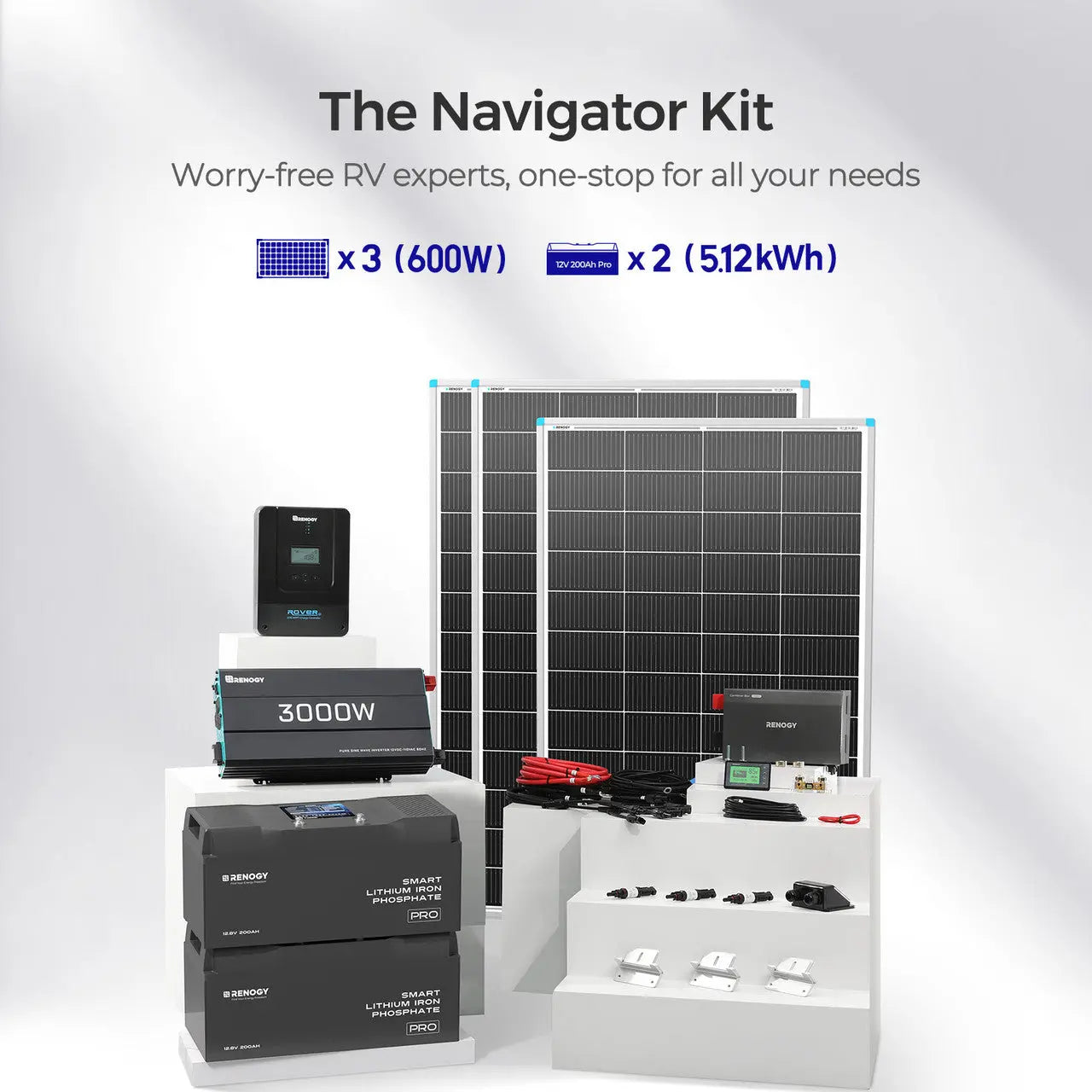
- Complete All-in-One Kit: Includes batteries, solar panels, inverters, and all necessary wiring
- Battery Storage Options: 2.56kWh, 5.12kWh, or 7.68kWh high-capacity LiFePO4 batteries
- High-Output Panels: 400W or 600W N-type solar panels for efficient charging
- Reliable Inverters: 2000W or 3000W pure sine wave inverters to power appliances safely
- Pre-Tested Components: All items tested for perfect compatibility, minimizing setup errors and maximizing performance
Is an RV Solar Kit Worth It?
For many RV owners, investing in a solar power system is one of the best upgrades they can make.
- Reduced reliance on campsites and hookups
- Lower long-term energy costs
- Greater travel flexibility
- Quiet and sustainable power
If you frequently travel off-grid or want more control over your energy usage, an RV solar kit is absolutely worth it.
Choosing the right system—especially one with reliable battery storage—makes all the difference.
Solar Panel Installation: DIY vs. Professional Setup
Choosing between DIY and professional solar panel installation depends on your budget and technical skills. A DIY approach can save money but requires electrical knowledge. Safety is crucial; improper installation can damage your system or pose hazards.
- Budget constraints
- Personal technical skills
- Time available for installation
- Desired assurance and reliability
FAQs About RV Solar Kits
Can I use 435W solar panels on my RV?
Yes, you can use 435W solar panels on your RV as long as your roof has enough space and your charge controller and inverter can handle the voltage and current. Check your system’s maximum input ratings before installation to ensure safe and efficient operation.
What size RV solar kit do I need?
The right size depends on your daily energy usage. Small setups (100W–200W) work for light use, while full-time RV living may require 400W+ systems with battery storage.
Can I run an RV entirely on solar power?
Yes, but it depends on your system size and battery capacity. A well-designed RV solar system with sufficient battery storage can support off-grid living for most daily needs.
Are RV solar kits better than buying individual components?
For most users, yes. RV solar kits are pre-configured for compatibility, making installation easier and reducing the risk of selecting mismatched components.
Do I need a battery for my RV solar system?
Yes. Solar panels generate power during the day, but a battery stores energy for use at night or during cloudy conditions, making it essential for reliable power.
How long do RV solar batteries last?
Lithium batteries (LiFePO4) typically last 8–15 years, depending on usage and maintenance, making them a reliable choice for RV solar systems.
Are plug and play solar panels enough for RV use?
Plug and play solar panels are convenient for light use, but they often lack the capacity needed for full-time RV living. A complete solar kit with battery storage is a more robust solution.


![Selecting the Best Trolling Motor Battery [Type & Size]](http://www.renogy.com/cdn/shop/articles/cover-best-battery-for-trolling-motor-1_7ce4605f-7480-4814-8ae1-6d5f86bc3497.jpg?v=1777455133&width=460)


