

Installing solar panels on the roof of your RV, van, or motorhome can be a great way to address your energy needs and stay comfortable on the road. When it comes to selecting solar panels for your mobile lifestyle, there are two main options to choose from: portable and roof-mounted solar panels. Which is best? There’s not a one-size fits all answer, so let’s go through the benefits of each.
What are Portable Solar Panel Systems?
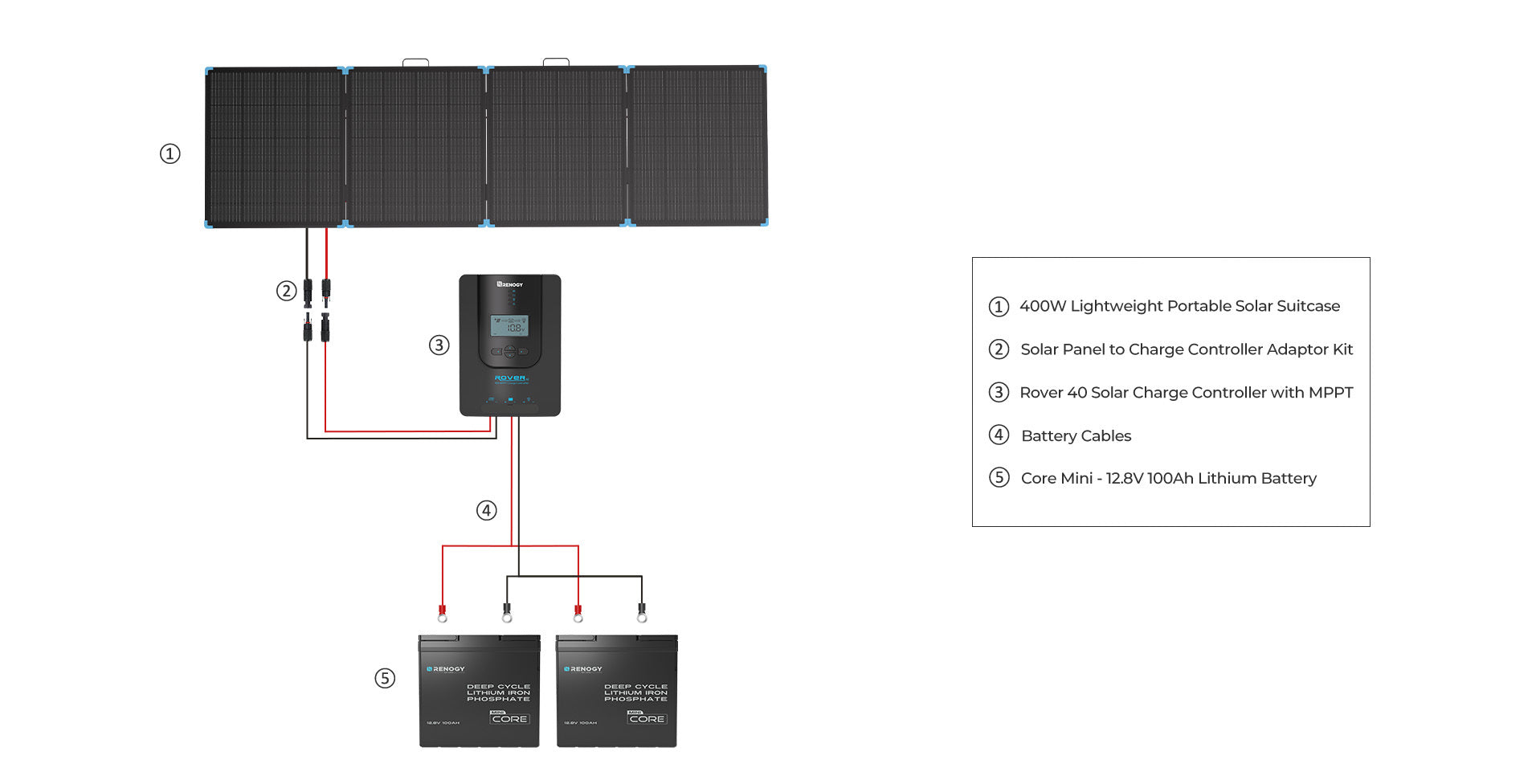
Portable solar panel systems give you the ability to generate and store your own electricity using lightweight, portable solar panels, charge controllers, batteries, and inverters. Instead of mounting to the roof, portable solar panels are available in a few different forms, from folding suitcase panel kits that can be set up on the ground to flexible panels that can be hung from your vehicle or other vertical surfaces.
Like roof mounted panels, portable solar panels are made up of many solar cells made of silicon. Panels have both a positive and a negative layer, which creates an electric field. When sunlight hits solar panels, they create an electric current. Panels are then connected to a charge controller, which controls how much current goes through a battery. Batteries store and produce DC power. In order to use household AC appliances, such as blenders, laptops, and phone chargers, an inverter is used to change the power from DC into AC power.
What are Roof-Mounted Solar Panel Systems?
Roof-mounted solar panel systems are available in a flexible or rigid form. Both are secured to the roof of your RV or van with bolts, brackets, and mounting hardware. Rigid panels are very durable. Renogy’s roof-mounted panels include a corrosion-resistant aluminum frame that is great for extended outdoor use, allowing the panels to last for decades. Flexible panels offer a more low-profile look and passersby won’t even be able to tell you have solar on your vehicle.
Are portable systems cheaper than roof-mounted systems?
Depending on the size of the system, portable solar power systems can be comparable in cost to roof-mounted systems. Because you’re not having to mount the panels on a roof, you will save on any time or installation costs you may have incurred with a roof-mounted system.
However, per watt costs for portable solar panel kits are typically a little bit higher than roof-mounted solar panel kits.
Portable Solar Panel Systems: Pros and Cons
| Pros | Cons |
|---|---|
| Portable – can move between vehicles or home, including RVs and cars. | Setup required every time you use them; not as convenient as roof-mounted panels. |
| Flexible placement – you can adjust position to maximize sunlight, independent of parking orientation. | Cannot safely charge while unattended due to theft or weather exposure risk. |
| Good for beginners – allows testing solar power without committing to permanent roof installation. | Limited power output compared to roof-mounted solar panels; may not fully meet high energy demands. |
| Great for emergency preparedness kits or off-grid trips. | Panels are exposed to elements and require careful storage to prevent damage. |
| Lightweight and compact – easier to transport and store. | Wiring setup and panel angle adjustments can be confusing for first-time users. |
Renogy 220/400W Lightweight Portable Solar Panel Suitcase
The Renogy 220/400W Lightweight Portable Solar Panel Suitcase is designed for RVers, weekend campers, and emergency preparedness. Its foldable, portable design makes it easy to carry and set up wherever you need power. Perfect for short trips or remote locations, it delivers reliable solar energy without the need for permanent installation.
- 30.2 lbs for easy portability.
- IP68 solar connectors and aluminum kickstands for fast, secure setup.
- Excellent weather resistance with ≥IP67 protection and ETFE coating.
- High efficiency – 23% cell efficiency and compact solar cell layout.
- Parallel wiring ensures shadows on one panel don’t reduce overall output.
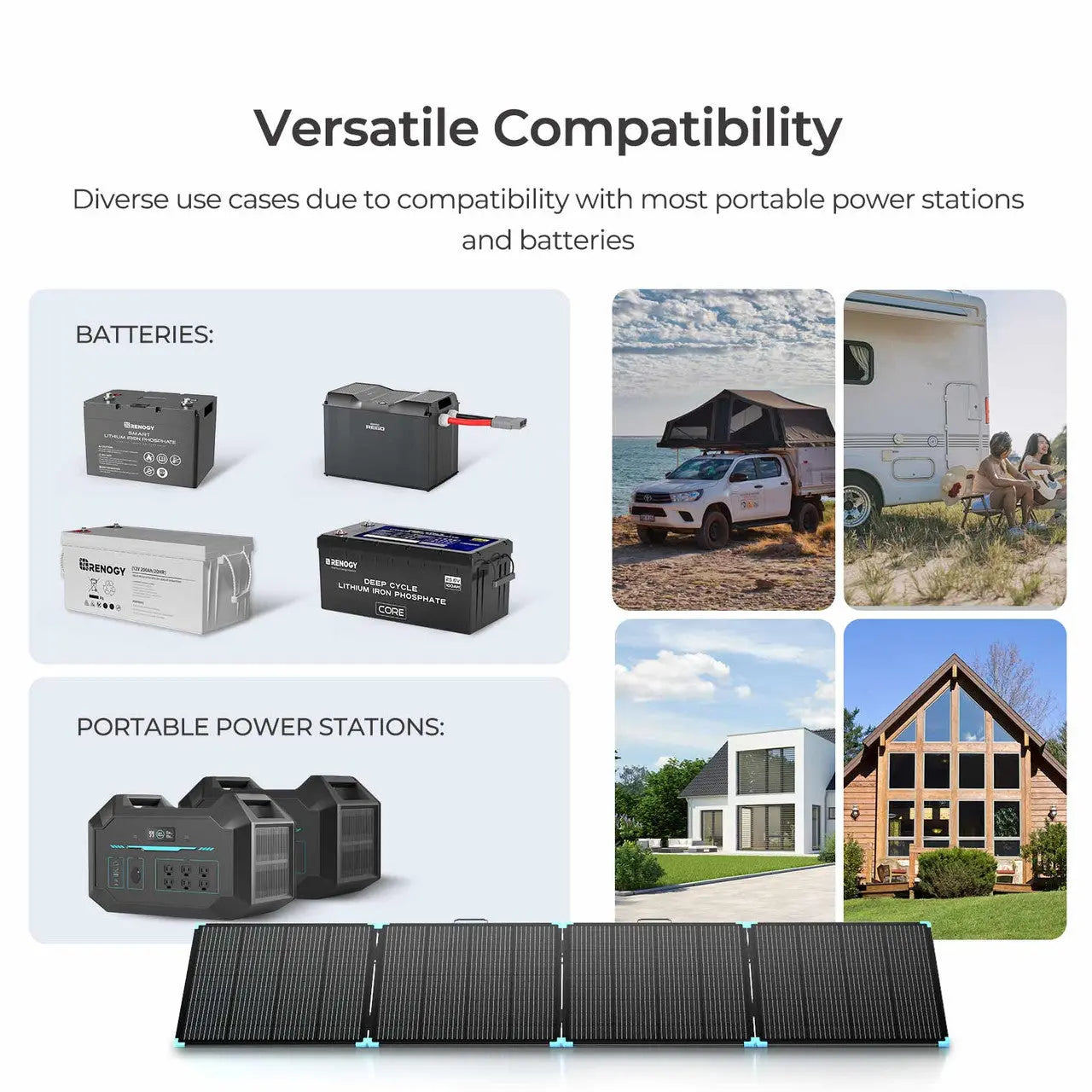
- Compatible with most power stations (DC input >48V required).
- 3-year standard warranty + 2-year extended warranty for peace of mind.
This portable solar suitcase lets you enjoy uninterrupted power for hours while traveling in your van or RV. Its robust materials and kickstands withstand harsh weather, scratches, and stains, making it a reliable solution for both leisure and emergency scenarios.
Portable vs Roof-Mounted Solar Panels: Which Fits Your Lifestyle?
| Scenario | Recommended System | Details |
|---|---|---|
| Weekend Road Warrior (RV trips) | Portable solar panel system | Portable panels are enough for short-term trips, easy to move between vehicles, and perfect for occasional camping. |
| Full-time Boondocker (remote camping) | Roof-mounted solar panel system | Maximizes energy production, panels stay safe from wildlife or elements. Check out roof-mounted kits for RVs. |
| Camping at RV parks / full-hookups | Portable solar panel system | Supplemental power for occasional charging when needed; flexible and easy to deploy panels. |
| Cabin or tiny home off-grid | Roof-mounted solar panel system | Permanent installation is cost-effective for larger energy needs. See kits for homes and cabins. |
| Vanlife / Mobile tiny homes | Portable or Roof-mounted | If mobility is key, portable is good; if full energy independence is needed, roof-mounted panels are recommended. |
| Emergency or disaster preparedness | Portable solar panel system | Easy to store and deploy, can power essential devices when grid power is unavailable. |


