


Powering Summer, On and Off Grid
Starting at $50. Harvest more sunlight and recharge faster with our ultra-efficient panels at the lowest prices.
-

 Best Seller
ShadowFlux™ 120W/200W N-Type Anti-Shading Solar Panel
25% EfficiencyLeading Anti-shading TechFrom $129.99Unit price /Unavailable -

 Hot
Hot100/175/200W N-Type Solar Panel
25% EfficiencyBalanced High-PerformanceFrom $109.99Unit price /Unavailable -

 New
New100/200W 12V N-Type Portable Solar Panel Suitcase Kit with 20A PWM Controller
25% EfficiencyFast Plug-and-Play SetupFrom $166.99Unit price /Unavailable -

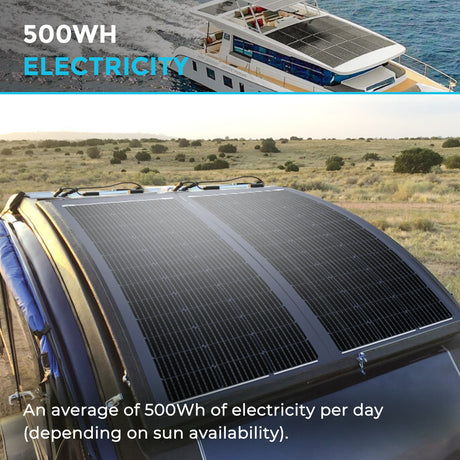
100W Lightweight Flexible Solar Panel(Black Division)
22% EfficiencyUltra-Flexible Durable Power$138.99Unit price /Unavailable -

 Hot
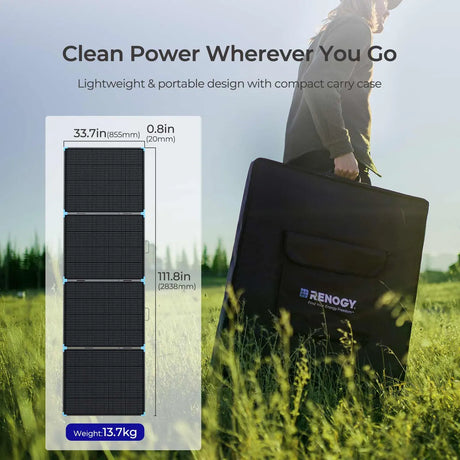
Hot220/400W Lightweight Portable Solar Panel Suitcase
23% EfficiencyRugged Portable Outdoor PowerFrom $339.99Unit price /Unavailable -

 Hot
Hot590W N-Type Bifacial Solar Panel(2-Pack)
25% EfficiencyBifacial 177W Extra PowerFrom $989.99Unit price /Unavailable -


E.Flex 100/200W N-Type Portable Solar Panel
25% EfficiencyPortable Direct-Charge PowerFrom $144.99Unit price /Unavailable -


100/300W N-Type Lightweight Portable Solar Panel Suitcase
25% EfficiencyRugged Portable Outdoor PowerFrom $162.99Unit price /Unavailable -

 New
New1280W Solar Panel | 4x 320W N-Type Panels w/Tilt Mounts
25% EfficiencyCompact, Durable, Efficient$1,389.99Unit price /Unavailable -


250W N-Type Bifacial Solar Panel
25% EfficiencyBifacial Extra 20W PowerFrom $261.99Unit price /Unavailable


Rigid Solar Panels
High-performance N-Type cells with 25% efficiency and ShadowFlux™ anti-shading tech for durable, permanent off-grid power.
-
Best Seller
ShadowFlux™ 120W/200W N-Type Anti-Shading Solar Panel
25% EfficiencyLeading Anti-shading TechFrom $129.99Unit price /Unavailable -
Hot
100/175/200W N-Type Solar Panel
25% EfficiencyBalanced High-PerformanceFrom $109.99Unit price /Unavailable -
New
1280W Solar Panel | 4x 320W N-Type Panels w/Tilt Mounts
25% EfficiencyCompact, Durable, Efficient$1,389.99Unit price /Unavailable -

 Hot
Hot320W N-Type Solar Panel(2-Pack)
25% EfficiencyCompact, Durable, EfficientFrom $599.99Unit price /Unavailable


Portable Solar Panels
Ultra-light, plug-and-playsolar blankets and suitcases. Compact 25% efficiency power for camping and mobile off-grid life.
-

 Hot
Hot200/400W N-Type Portable Solar Panel Blanket
25% EfficiencyUltra-Light Portable PowerFrom $239.99Unit price /Unavailable -
100/300W N-Type Lightweight Portable Solar Panel Suitcase
25% EfficiencyRugged Portable Outdoor PowerFrom $162.99Unit price /Unavailable -
Hot
220/400W Lightweight Portable Solar Panel Suitcase
23% EfficiencyRugged Portable Outdoor PowerFrom $339.99Unit price /Unavailable -
New
100/200W 12V N-Type Portable Solar Panel Suitcase Kit with 20A PWM Controller
25% EfficiencyFast Plug-and-Play SetupFrom $166.99Unit price /Unavailable -


220W Lightweight Portable Solar Panel Suitcase
23% EfficiencyRugged Portable Outdoor Power$339.99Unit price /Unavailable -
E.Flex 100/200W N-Type Portable Solar Panel
25% EfficiencyPortable Direct-Charge PowerFrom $144.99Unit price /Unavailable


Bifacial Solar Panels
Maximize energy with bifacial gain up to 30%. N-Type tech ensures more power per square foot for advanced solar systems.
-
Hot
590W N-Type Bifacial Solar Panel(2-Pack)
25% EfficiencyBifacial 177W Extra PowerFrom $989.99Unit price /Unavailable -
250W N-Type Bifacial Solar Panel
25% EfficiencyBifacial Extra 20W PowerFrom $261.99Unit price /Unavailable -


Flexible Solar Panels
Ultra-flexible and lightweight design. Perfectly contours to RV roofs and boat decks for a seamless, bracket-free installation.
-

 22% EfficiencyUltra-Flexible Durable PowerFrom $307.99Unit price /Unavailable
 -
100W Lightweight Flexible Solar Panel(Black Division)
22% EfficiencyUltra-Flexible Durable Power$138.99Unit price /Unavailable -


100W Lightweight Flexible Solar Panel
22% EfficiencyUltra-Flexible Durable Power$138.99Unit price /Unavailable -


Frequently Asked Questions
What do I need to complete my off-grid solar power system?
What do I need to complete my off-grid solar power system?
To build a complete off-grid solar system, you need a bifacial solar panel, a charge controller to regulate power flow, and a battery to store energy. Additionally, you'll need adapter kit cables to connect the solar panels and charge controller, as well as tray cables to link the charge controller to a deep-cycle battery.
What is the difference between on-grid and off-grid solar systems?
What is the difference between on-grid and off-grid solar systems?
An on-grid solar system is connected to the utility grid, allowing you to draw power from the grid and send excess energy back. In contrast, an off-grid solar system is completely independent, storing generated power in batteries for later use. Off-grid systems ensure uninterrupted power and are not affected by grid outages.
Why is my bifacial solar panel underperforming?
Why is my bifacial solar panel underperforming?
A bifacial solar panel may generate less power due to indirect sunlight, excessive heat, cloudy weather, or dirt buildup on the glass surface. These factors reduce energy absorption and overall efficiency.
How should I connect solar panels in my electrical circuit (series vs parallel)
How should I connect solar panels in my electrical circuit (series vs parallel)
Solar panels can be wired in series or parallel, depending on your system voltage and current requirements. Series wiring raises system voltage, ideal for high-voltage setups, while parallel wiring boosts current for battery-based systems. In contrast, a parallel connection increases the system’s current while maintaining the same voltage, making it better suited for battery-based systems that require higher amperage. To achieve the best power output and system efficiency, a combination of series and parallel connections may be used based on your solar energy storage and inverter requirements.
How many solar panels do I need?
How many solar panels do I need?
The best way to gauge how many solar panels you need, is to understand and define the power load needed from this system. Power is measured in Watts, and capacity is commonly measured in Watt-hours (multiplying power output in watts by the required number of hours of operation multiplied by a safety factor of 1.5-2). Therefore, it is wise to size your battery bank first based on the minimum required capacity, and accordingly decide how many panels or how much power input is needed.
What is the meaning of 24V in the product title,Why is this value different from the voltage of the solar panel?
What is the meaning of 24V in the product title,Why is this value different from the voltage of the solar panel?
When you open the product page, you will see a title like "xxx Watt 24 Volt Monocrystalline Solar Panel". The "24V" here does not refer to the voltage of this solar panel (VOC or VMP), but to the fact that one xxxW solar panel is suitable for 24V system (i.e. a 24V battery),no need for additional series and parallel connections.Therefore, these are two completely different values with different meanings.
You May Also Like
-


-


-

 Best Seller
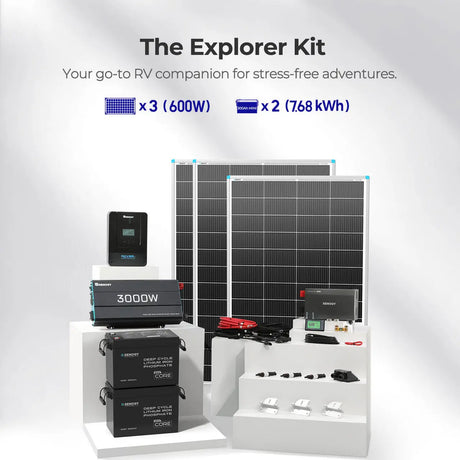
RV Solution (2.56kWh | 5.12kWh | 7.68kWh)
One-Stop RV SolutionReliable and Efficient Power AnywhereFrom $2,099.99Unit price /Unavailable -

 New
New -

 Hot
HotRover 60 Amp MPPT Solar Charge Controller
98% Conversion EfficiencyAuto-Detects 12V/24V SystemFrom $399.99Unit price /Unavailable


