

Are you wondering how to charge RV batteries? Searching for ways to charge the battery faster? This article presents a step-by-step guide to charging an RV battery and safety tips. Let's look into detailed specifics.
Methods to Charge an RV Battery
Compare the main options to charge RV batteries, their pros, cons, and best use cases.
| Method | Requirements | Advantages | Limitations | Best Use Case |
|---|---|---|---|---|
| Solar Panels | Panels, Inverter, Charge Controller | Free energy, portable, works anywhere | Initial investment required, weather dependent | Off-grid travel, long-term independence |
| Alternator | Vehicle alternator connected to RV battery | Charges while driving, automatic top-ups | Slow charging, minor boost only, may wear alternator | Quick top-ups during travel |
| Shore Power | AC plug-in at RV parks, converter for DC appliances | Stable, reliable, powers AC devices directly | Stationary, requires specific locations, may need converter for DC devices | Camping at parks with hookups |
| Generator | Portable or built-in generator, fuel (gas/propane) | Portable, works anywhere, reliable | Fuel costs, noise, maintenance required | Remote locations, backup power |
Solar panels provide long-term free energy and full independence. Alternators and generators are convenient for short trips or emergencies, while shore power is ideal for stationary camping.

How Long Does It Take to Charge an RV Battery?
Charging time depends on battery type, state of charge, charger type, and power source.
- Battery type: LiFePO4 batteries charge up to 5× faster than lead-acid. Lithium-ion batteries reach full charge in minutes to a few hours, while lead-acid may take 12–16 hours. Learn more about lithium-ion vs lead-acid batteries.
- State of charge: The more discharged the battery, the longer it takes to charge.
- Charger type: Match voltage to battery specs. Over-voltage can reduce lifespan or cause damage.
- Power source: Estimate charging time with Battery Ah ÷ Source Amps. Example: 300Ah battery ÷ 15A = 20 hours.
- Source speed: Generators charge faster than solar; solar charging can take 1.5–48 hours depending on panel output and battery type.

How to Charge RV Batteries: Step-by-Step Guide
Charging your RV batteries correctly improves performance and extends lifespan. Follow these key steps:
Step 1: Locate the Battery
Turn off the RV and apply emergency brakes. Find the battery, usually under steps, in storage compartments, or near the front storage bay. RVs may have one or multiple batteries depending on the model.
Step 2: Remove Battery Cables
Use a wrench to remove the cables. Always disconnect the negative (black) cable first, then the positive (red) cable.
Step 3: Clean Terminals
Apply a baking soda paste to remove corrosion. Scrub gently, then coat terminals with petroleum jelly or grease to prevent future corrosion.
Step 4: Check Water Level
Remove fill caps and ensure electrolyte covers the splash plate. Add distilled water if needed. Skip this step for sealed or dry batteries.
Step 5: Connect the Charger
Attach the red charger cable to the positive terminal first, then black to the negative terminal. Plug in and turn on the charger. Charge until the battery indicator shows full.
Step 6: Unplug the Charger
After charging, turn off the charger. Remove the black cable first, then the red cable. Store cables safely.
Tip: For the fastest charging, use LiFePO4 batteries with smart chargers—they reach full charge up to five times faster than lead-acid batteries.
RV battery charging safety tips
Now that you know how to charge RV batteries. Below is a list of some safety tips you should keep in mind when charging your batteries.
- If you want to buy a battery charger, don't forget to ensure that it is super compatible with the type of battery you have (lead-acid, lithium, or AGM). Always consider amperage and the right voltage level.
- If your RV has lead-acid batteries, place them in a well-ventilated space and prevent their terminals from corrosion.
- Always use a charge controllerwhen charging your RV batteries with solar cells. If you don't use the controller, your batteries may get overcharged when the sun shines more brightly. Overcharging degrades the battery performance and greatly reduces its lifespan. Therefore, avoid overcharging at any cost.
- Proper handling of cables is also crucial. When connecting the charger, connect the red cable first to the positive terminals. In contrast, remove the black cable first from the negative terminal while disconnecting the charger.
- Don't charge a frozen RV battery, and avoid charging or storing it above 50°C (or 122°F).
Poor ventilation, overcharging, and undercharging may lead to RV batteries overheating. This can result in explosions, fires, and other serious risks. To prevent your battery from overheating, avoid overcharging, limit high-load activities, and keep the battery in a cool, dry place.

Upgrade with a Complete RV Solar Kit
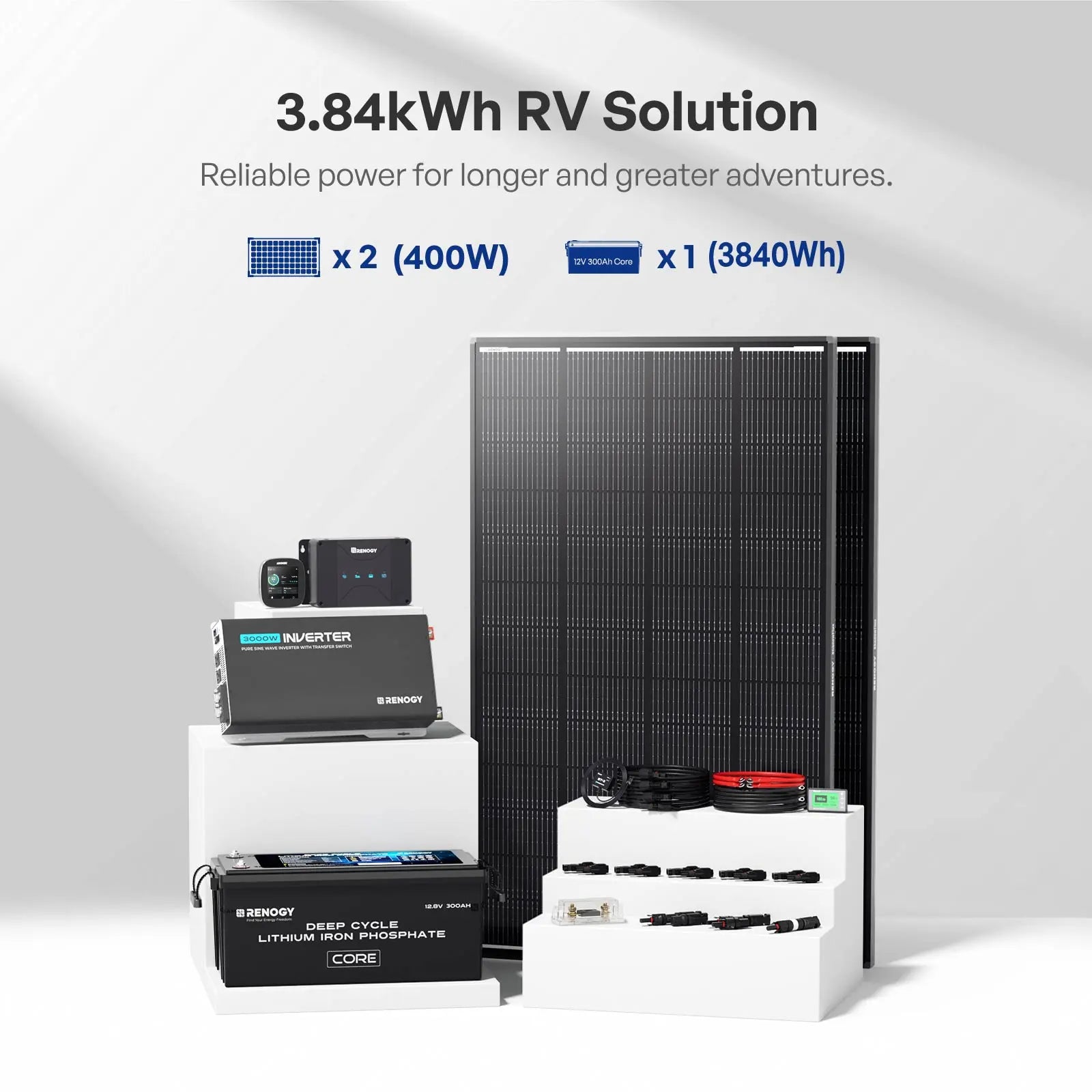
If you want a hassle-free way to power your RV, the ShadowFlux™ N-Type RV Solar Solution gives you everything in one kit. The fully integrated system includes anti-shading solar panels, batteries, and a charge controller, all designed to work together seamlessly. It's easy to install, reliable on the road, and compatible with most RV setups—perfect for travelers who want consistent power without the guesswork or compatibility headaches.
FAQs about charging RV batteries
What is the best way to charge my RV battery?
Different people may have different preferences, e.g., shore power, solar energy, alternator, and generator. However, using solar energy to charge your batteries is the best method. All you need to do is connect solar panels to the roof of your RV and use an inverter. It is a one-time investment with access to an unlimited, free energy source.
Does plugging in an RV charge the battery?
Yes, you can plug your RV into shore power to charge its battery. Make sure your RV has a built-in converter and you turn on the battery disconnect switch before you plug in your RV into the shore power.
How do I keep my RV battery charged when not in use?
You can use a trickle charger to charge the battery at a slow rate and compensate for self-discharge.
Conclusion
Keeping your RV batteries charged is crucial during trips, camping, and other outdoor fun activities. If you are wondering how to charge RV batteries with a battery charger or other input power sources, this guide has discussed it in detail.
To charge your RV batteries effectively, be sure to read through the step-by-step guide presented in the discussion above. Remember to follow the safety tips to prevent any sort of risks.
![Selecting the Best Trolling Motor Battery [Type & Size]](http://www.renogy.com/cdn/shop/articles/cover-best-battery-for-trolling-motor-1_7ce4605f-7480-4814-8ae1-6d5f86bc3497.jpg?v=1777455133&width=460)


