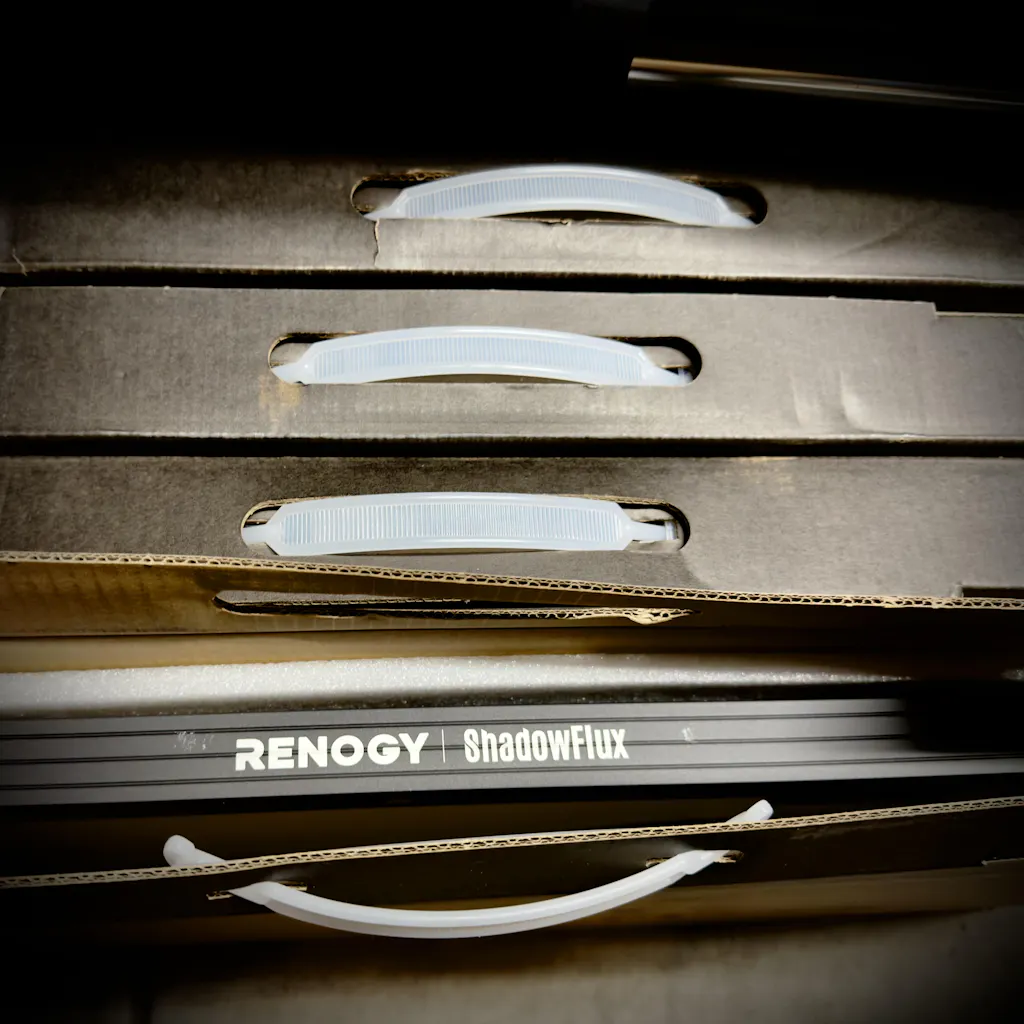
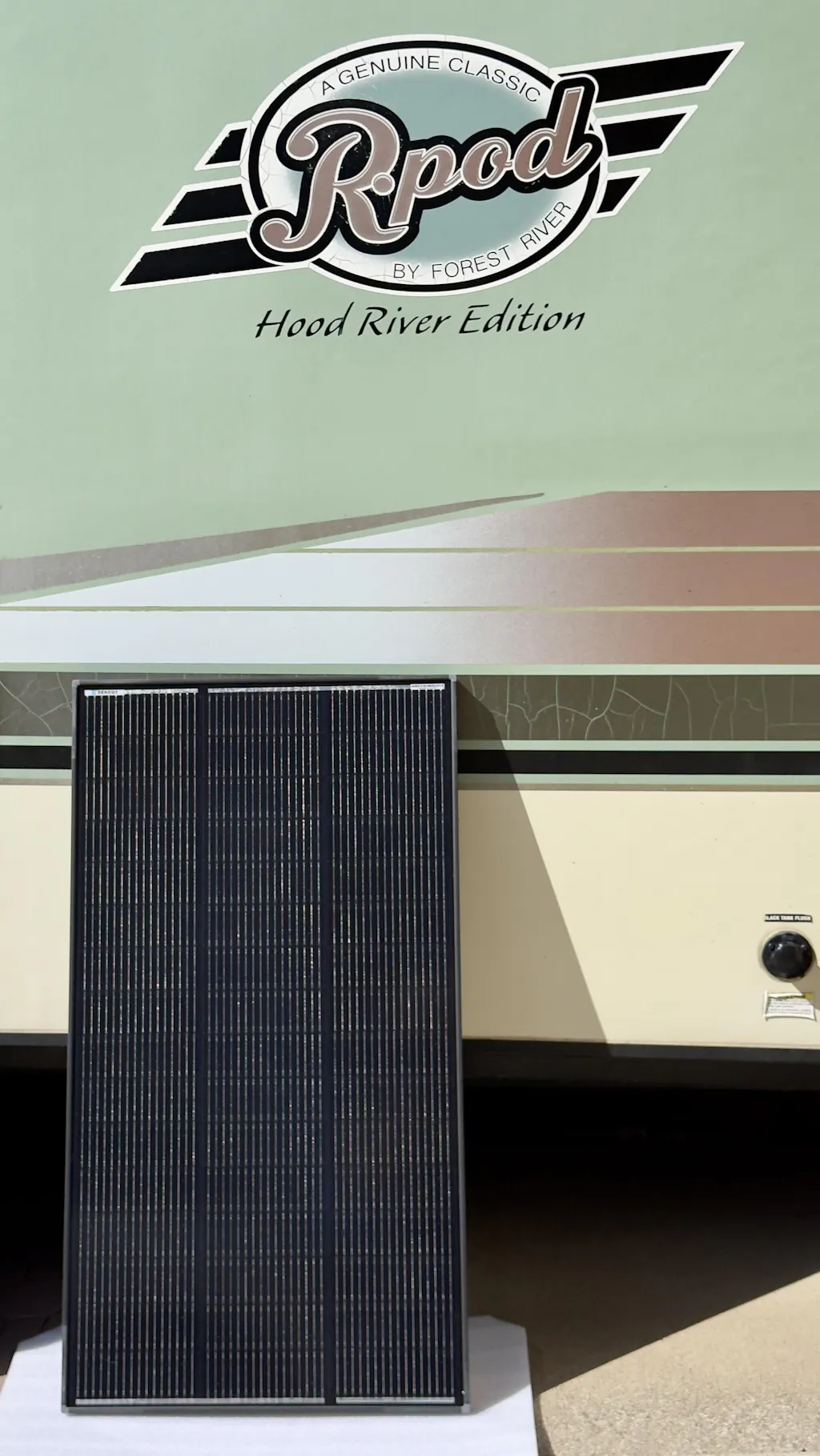
ShadowFlux 120/200W N-Type High Efficiency Anti-Shading Solar Panel


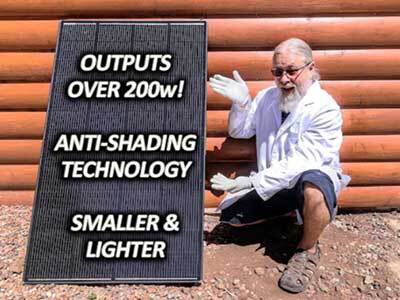
- -ShadowFlux anti-shading tech delivers up to 85% more output in partial shade, keeps charging when others quit.
- -25% conversion efficiency N-Type cells with 16BB tech for superior performance in heat and low light.
- -Ultra-compact with the highest power density to maximize watts when roof space is limited.
- -IP67 waterproof, built for rain, snow, dust, and vibration.
- -High voltage for 12V/24V systems, works with standard MPPT controllers.
- -Dimensions: 120W: 41.42*22.76*1.18 inch; 200W: 49.69*30.08*1.18 inch
ShadowFlux 120/200W N-Type High Efficiency Anti-Shading Solar Panel - 200W / 1 piece is backordered and will ship as soon as it is back in stock.


ShadowFlux 120/200W N-Type High Efficiency Anti-Shading Solar Panel


The World's 1ˢᵗ Anti-Shading Rigid Panel


$1,500 Saving from Extra Power
When traditional panels drop to near-zero from shade, ShadowFlux™ maintains up to 85% output. That's 6,500 kWh* saved over your system's lifetime—worth $1,500 in electricity bills!


5 Years Longer Lifespan
ShadowFlux™ prevents shaded areas from overheating and slowing down your entire system. Your panels stay cooler, last longer, and keep saving you money year after year.
*Lifespan depends on actual use


Zero Hassle, Worry Free
ShadowFlux keeps producing power even when partially shaded—no more surprise outages from passing shadows! Forget constantly adjusting panels or cleaning off every little debris.


Charge Faster with Highest Efficiency
Get the highest efficiency available in consumer silicon solar panels. Pair with MPPT controllers for even better charging performance.


Tested Tough for Your Experience
Watch ShadowFlux Reliability Test >>>


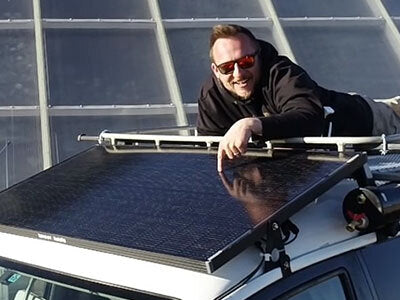
Genuine Praise from Real Users
-
-
-
-
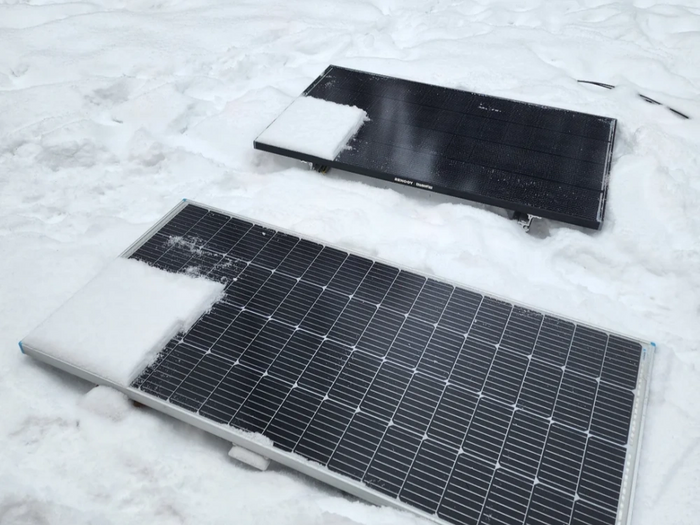
Fearless-Stop9569
"The regular panel barely started making power at 15% covered (0.04A vs 0.88A). Even with 15% coverage the ShadowFlux was making 75% over the power it made with no snow (0.88A vs 1.15A)."
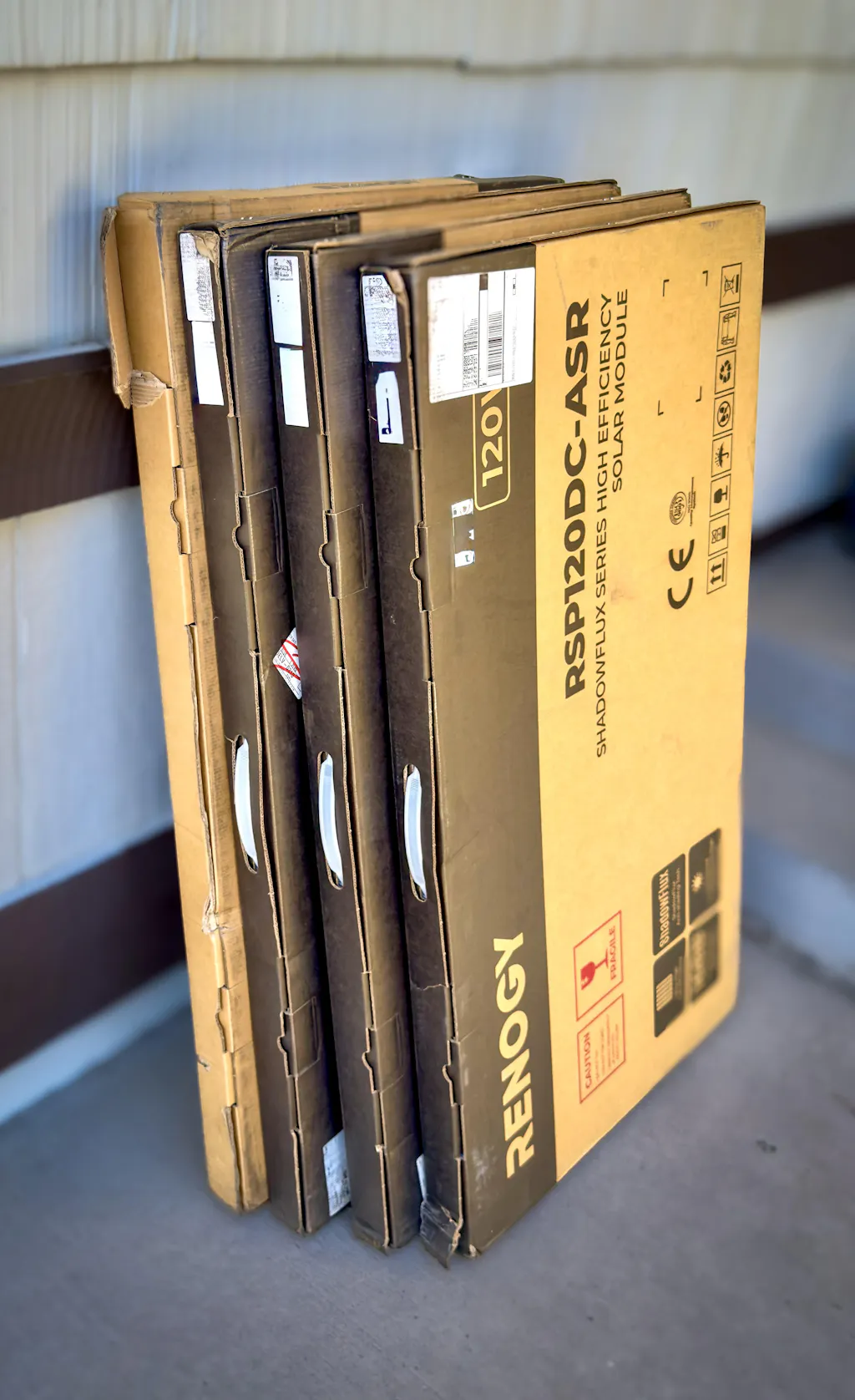
Package Includes
-
ShadowFlux™ N-Type Anti-Shading 200W Solar Panel
x1
-
ShadowFlux™ N-Type Anti-Shading 120W Solar Panel
x1
200W ShadowFlux™
Warranty
Certifications:
120W ShadowFlux™
Product Comparison
| Facet | ||
|---|---|---|
| Max Power at STC | ||
| Max Power at STC | 200W | 120W |
| Open Circuit Voltage | ||
| Open Circuit Voltage | 36.5V | 33.69V |
| Short Circuit Current | ||
| Short Circuit Current | 6.86A | 4.57 A |
| Optimum Operating Voltage | ||
| Optimum Operating Voltage | 31.3V | 28.89V |
| Optimum Operating Current | ||
| Optimum Operating Current | 6.38A | 4.21A |
| Operating Temperature | ||
| Operating Temperature | -40°F~185°F / -40℃~85℃ | -40°F~185°F / -40℃~85℃ |
| Maximum System Voltage | ||
| Maximum System Voltage | 1000 VDC | 1000 VDC |
| Cell Type | ||
| Cell Type | N-Type Cell | N-Type Cell |
| Cell Efficiency | ||
| Cell Efficiency | 25% | 25% |
| Busbar | ||
| Busbar | 16 Busbar | 16 Busbar |
| Anti-shading Tech | ||
| Anti-shading Tech | Cell-level Shadow Management Tech | Cell-level Shadow Management Tech |
| Maximum Series Fuse Rating | ||
| Maximum Series Fuse Rating | 15A | 15A |
| Weight | ||
| Weight | 10.81kg/23.83lb | 6.80kg/15.87lb |
| Dimension | ||
| Dimension | 49.69*30.08*1.18inch | 1052*578*30mm/41.42*22.76*1.18inch |
| Protection Rating | ||
| Protection Rating | IP 67 | IP 67 |

Resources Download
Frequently Asked Questions
How ShadowFlux outperforms under real-world shadows?
How ShadowFlux outperforms under real-world shadows?
Conventional solar panels can suffer a total power loss from just a single shaded cell. ShadowFlux is engineered from the ground up to tackle the messy, complex shadows of the real world—so you keep generating power when others can't.
Drastically Reduced Power Loss: While all panels lose some power when shaded, ShadowFlux loses far less. You'll see significantly higher wattage output under the same shaded conditions compared to a conventional panel.
What kinds of shading is ShadowFlux designed for?
What kinds of shading is ShadowFlux designed for?
ShadowFlux's advanced cell interconnection technology minimizes power loss across a wide spectrum of common shading scenarios, including:
Small & Point Shadows: Bird droppings, leaf litter, splattered mud.
Linear Shadows: Power lines, antenna wires, boat rigging, fence lines.
Partial & Patchy Shadows: Shadows from chimneys, vents, or scattered tree branches.
Dynamic Shadows: Moving shadows from clouds or shifting objects.
For the Best Experience:
To maximize energy production, we always recommend aiming for over half of the panel surface to be in direct sunlight. This allows ShadowFlux to provide a critical power advantage when shading is unavoidable."
Is ShadowFlux designed for a 12V or 24V system?
Is ShadowFlux designed for a 12V or 24V system?
ShadowFlux features a high open-circuit voltage (36.5V) and is compatible with both 12V and 24V battery systems.
However, if you expect long-duration partial shading (e.g., trees, debris, roof racks, or boat masts that frequently cast shadows), a 12V system generally provides greater stability and more reliable charging performance under these non-ideal lighting conditions.
Note:
This recommendation applies only when using a single panel. System behavior under series or parallel configurations is not included in this discussion, as multi-panel setups introduce different electrical characteristics.
What kind of charge controller do I need for the ShadowFlux panel?
What kind of charge controller do I need for the ShadowFlux panel?
We strongly recommend using an MPPT charge controller for the best performance and compatibility.
MPPT controllers are far more efficient and make full use of your panel’s voltage—even under weak or changing sunlight. Some third-party PWM controllers may not work properly, so MPPT is the safer choice.
Recommended specs:
- Max Input Voltage: ≥ 50V (or 50V × number of panels in series)
- Charging Current: > 10A
What can Shadowflux Anti-Shading Technology do for me?
What can Shadowflux Anti-Shading Technology do for me?
To set up a complete off-grid solar power system, you will need a solar panel to generate electricity, a charge controller to regulate the current, and a battery to store the energy for later use. Additionally, you’ll require adapter kit cables to connect the solar panel to the charge controller and tray cables to link the controller to a deep-cycle battery. These components work together to ensure a reliable and efficient off-grid power solution.
What do I need to complete my off-grid solar power system?
What do I need to complete my off-grid solar power system?
To set up an off-grid solar system, you’ll need a solar panel connected to a charge controller to regulate the current, and a battery to store the power. You’ll also need adapter kit cables to connect the solar panels and charge controller, plus tray cables to link the controller to a deep-cycle battery.
What does off-grid and on-grid mean?
What does off-grid and on-grid mean?
On-grid systems refer to solar power setups that are connected to the electrical grid, allowing you to draw power from the grid when needed. In contrast, off-grid systems operate independently of the grid, storing the power they generate for later use. This independence makes off-grid systems a reliable option in areas without grid access or during blackouts, as they are unaffected by grid outages.
Why is my solar panel underproducing power?
Why is my solar panel underproducing power?
Solar panels may underperform due to various factors, most of which are related to environmental conditions. Indirect sunlight, high temperatures, cloudy weather, or the accumulation of dirt and debris on the panel’s surface can all significantly reduce energy output. Regular maintenance and proper placement can help optimize performance.
How should I connect solar panels in my electrical circuit - series or parallel?
How should I connect solar panels in my electrical circuit - series or parallel?
Solar panels can be connected in series or parallel to match your electrical circuit size and power requirements.
In a series connection, the operating voltage of each panel is added together, while the current remains the same as that of a single panel.
Conversely, in a parallel connection, the current from each panel is combined to determine the system's total current output, while the voltage remains the same as that of a single panel.
To achieve optimal power output and meet your system’s specifications, you can use a combination of both series and parallel connections.
How many solar panels do I need?
How many solar panels do I need?
To determine how many solar panels you need, start by understanding and defining the power load required for your system.
Power is measured in watts, while capacity is measured in watt-hours, which is calculated by multiplying the power output (in watts) by the number of hours of operation, then adding a safety factor of 1.5 to 2.
It’s recommended to size your battery bank first based on the minimum required capacity. Once you have this figure, you can determine how many solar panels or how much power input is necessary to meet your energy needs.