Renogy 24/7 AI Agent | 6AM to 5PM PT Live Chat | Submit a Case Anytime Contact Us

Solar Suitcase 220W Lightweight Portable Solar Panel

SKU: RSP220LSC-US

Benefit 1:Enjoy 3 Items 5% Off | 5 Items 8% Off | 7 Items 10% Off
Benefit 2:enjoy an exclusive price on Dec. 4-15
*Need to add to cart first

$309.99 $339.99
+ 3090   Renogy Rays after purchase.
Log In About Rays

  • Sleek, portable, and foldable, weighing just 15.9lbs.
  • Superior fiberglass material to withstand decades of use
  • IP68 solar connectors and aluminum kickstands for easy setup
  • Unmatched durability with IP68 protection & ETFE coating.
  • 3-year standard warranty + 2-year extended warranty.
Quantity:
Payment Methods
Delivery Methods
Delivery time: 1-3 business days.Shipping Policy
Request Bulk Purchase Prices
For Home use For Business Use
Secure Payment with 0% APR Intallments
Lifetime Customer Support
30-Day Return and Refund Service
Show More Benefits Show Less
Description
Includes
Specs
Downloads
FAQ
Reviews

220W Lightweight Portable Solar Suitcase

The most lightweight and durable solar suitcase with robust kickstands.

Reliability Redefined

Super fiberglass material is used to protect this device against harsh weather conditions and general wear and tear. With a long warranty period, you can rest assured that your solar power needs will remain fulfilled for a long time.

Robust Structure for Consistent Panel Output

Sturdy, rust-resistant kickstands allow maximum power generation.

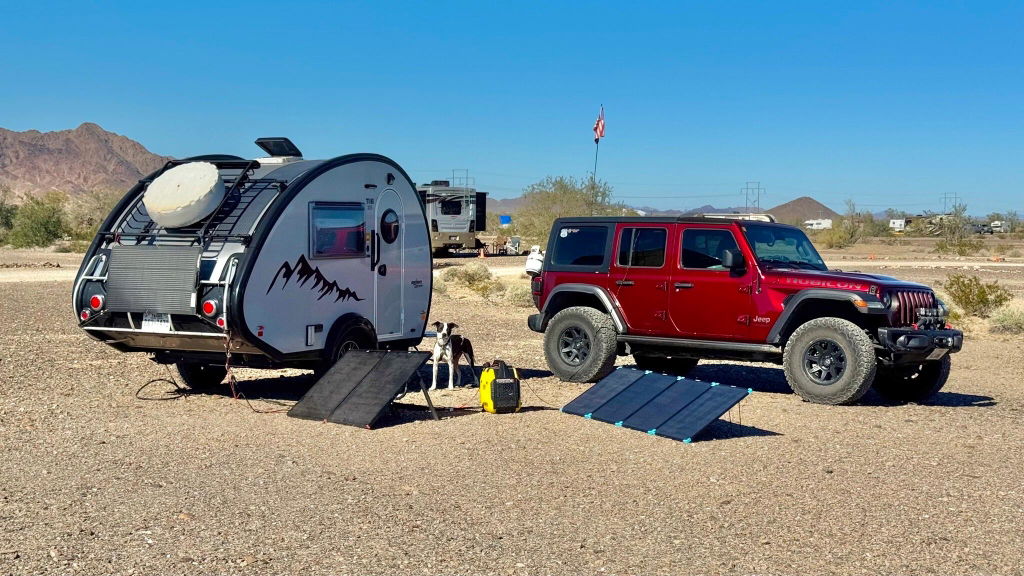
SUV & Pickup Truck
RV

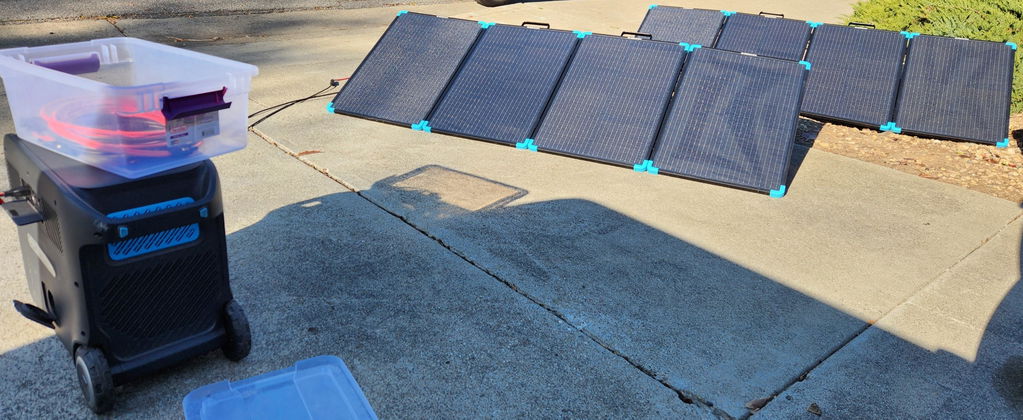
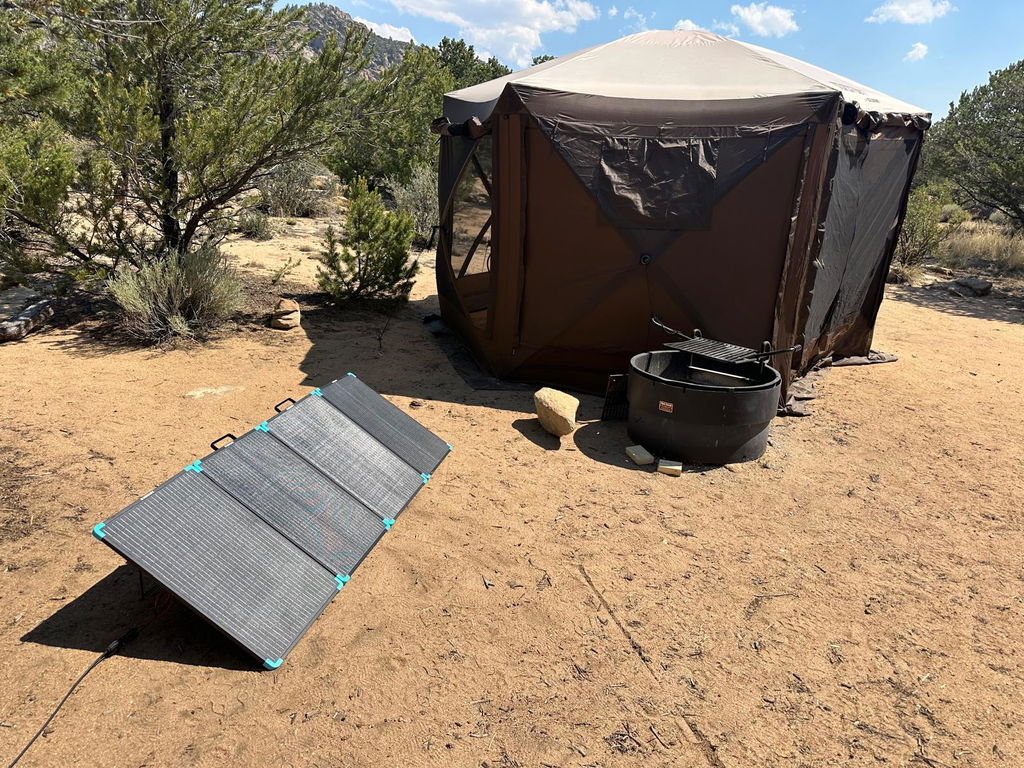
Easy to Assemble

Whether you are setting it up in your backyard or on a mountain top, this solar suitcase is unbelievably easy to assemble. Once you set it up, you can enjoy power off-the-grid and be a digital hermit or rely on a source of power back-up that will never let you down.

Built to Last

This portable solar suitcase is built with a host of protective measures such as robust kickstands, IP68 protection & ETFE coating. All of these characteristics are meant to keep it (and you) safe and secure during long, arduous journeys.

Ultimate Reliability with Impeccable Efficiency

Maximizing module potential with 22.7% cell efficiency while harnessing compact solar cell layouts for enhanced module efficiency.

Seamless Power Everywhere

Since this system is compatible with most portable power stations and batteries, it is extremely reliable no matter where you are headed. Simply fold it into a suitcase, slip it into its bag, and get going. It will fit inside your vehicle without any issues.

Unyielding Strength for Extended Outdoor Reliability

Built to last with premium materials for years of reliable performance.

Protective Case

Easily portable for transportation, offering impact protection.

Fiberglass Reinforcement

Delivers exceptional durability even in the face of light hailstorms.

Corner Protection

Ensures longevity and resilience against wear and tear.

ETFE Coating

Provides enhanced durability and weather resistance.

Why Choose Renogy

Redefining excellence in solar solutions.

220W Solar Suitcase:

220W Lightweight Portable Solar Suitcase

x 1

220W Solar Suitcase + Charge Controller:

220W Lightweight Portable Solar Suitcase

x 1

Voyager 20A PWM Charge Controller

x 1

220W Compact suitcase RV kit:

220W Lightweight Portable Solar Suitcase

x 1

12.8V 100Ah Core Mini Battery

x 1

IP67 50A DC-DC Battery Charger with MPPT

x 1

16FT 10AWG Battery to Charge Controller Tray Cables for 3/8 in Lugs

x 1

20FT 10AWG Adaptor Kit

x 1

220W Compact suitcase RV kit:

220W Lightweight Portable Solar Suitcase

x 1

12.8V 100Ah Core Mini Battery

x 1

Rover Li 20 Amp MPPT Solar Charge Controller

x 1

16FT 10AWG Battery to Charge Controller Tray Cables for 3/8 in Lugs

x 1

20FT 10AWG Adaptor Kit

x 1

220W Lightweight Portable Solar Suitcase

Max Power at STC
220W
Open Circuit Voltage
23.6V
Short Circuit Current
12.1A
Optimum Operating Voltage
20.0V
Optimum Operating Current
11A
Maximum System Voltage:
600VDC
Maximum Series Fuse Rating:
15A
Cell Efficiency
22.70%
Module Efficiency
17.3%
Operating Temperature:
-40°F~185°F / -40℃~85℃
Dimensions (with handle):
1843x730x20 mm (72.56x28.74x0.79 in)
Dimensions (without handle):
1843x690x20 mm (72.56x27.17x0.79 in)
Dimensions (folded):
460*690*80mm (18.11*27.17*3.15in)
Weight:
7.20kg/15.87lb
Warranty
5-year output warranty & material and workmanship warranty

Renogy 20A Voyager Charge Controller

Nominal Voltage
12 VDC
Self-consumption
≤8mA
Rated Charge Current
20A
Operating Temperature
-40°F to 140°F
Max. PV Input Voltage
26 VDC
Dimensions
6.38 x 3.82 x 1.34 inches
Grounding
Common Negative
Weight
0.88 lbs

Frequently Asked Questions

What do I need to complete my off-grid solar power system ?

To regulate current, a solar panel must be connected to a charge controller, while the electrical power can be stored by connecting it to a battery. To wire the solar panel(s) and charge controller, you will need adapter kit cables. Finally, tray cables are necessary to connect the charge controller to a deep-cycle battery.

What does off-grid and on-grid mean ?

Simply put, on-grid solar power equipment (like solar panels or arrays) is connected to the electrical grid. On the other hand, off-grid equipment entails systems that are not connected to the grid. Instead, they store the power that is generated for future use. The latter offers several benefits. First, it is portable and hence, can be utilized when travelling. Moreover, off-grid systems are not affected by grid blackouts.

Why is my solar panel under producing ?

Several factors may be impacting the performance of your solar panel. Typically, indirect sunlight, temperature rise, cloudy sky, and dirt and stain build up on the top glass lead to a reduced power output.

How should I connect solar panels in my electrical circuit (series vs parallel)

Depending on your electrical circuit size and power demand, solar panels can be connected in series or in parallel. When you connect them in series, the system current output will be the same as that of a singular panel, while producing the effect of adding up their operating voltage output. On the other hand, the operating current output of individual panels is added up to be the system output current when they are connected in parallel. In this case, the system output voltage will be the same as the output voltage of one solar panel. To meet the optimum power output and system rating for your power system, you can use both parallel and series connections.

How many solar panels do I need ?

The best way to gauge how many solar panels you need, is to understand and define the power load needed from this system. Power is measured in Watts, and capacity is commonly measured in Watt-hours (multiplying power output in watts by the required number of hours of operation multiplied by a safety factor of 1.5-2). Therefore, it is wise to size your battery bank first based on the minimum required capacity, and accordingly decide how many panels or how much power input is needed.

Reviews